
Views: 217 Author: Shandong Newnature Biotechnology Co., Ltd. Publish Time: 2026-07-04 Origin: Site


Content Menu
● Natural Sweetening Solutions for Modern Bakery and Healthcare Formulations
● Why Natural Sweeteners Matter in Today's Food, Beverage and Healthcare Markets
● Erythritol Fundamentals from a Formulator's Perspective
>> What Makes Erythritol Unique?
>> Erythritol in Bakery Applications: Beyond "Sugar Replacement"
● Managing Cooling Effect and Crystallization in Erythritol‑Rich Systems
>> Practical Levers to Control Cooling
>> Crystallization and Texture Stability
● How to Mask Stevia Aftertaste in Real‑World Formulations
>> Acidity and Flavor Modulation Strategies
● Integrating Functional Polyols and Dietary Fibers for Health‑Focused OEM/ODM Projects
>> Building Low‑Glycemic, High‑Fiber Systems
● OEM/ODM Collaboration: Turning Ingredient Science into Market‑Ready Products
>> Key Steps in Successful Co‑Development
● Call to Action – Partner with a Specialist in Natural Sweetening Systems
● Frequently Asked Questions (FAQ)
>> FAQ 1 – Is erythritol safe for long‑term consumption?
>> FAQ 2 – How much erythritol can I use in bakery products?
>> FAQ 3 – What is the best way to reduce stevia bitterness?
>> FAQ 4 – Can erythritol fully replace sugar in all applications?
>> FAQ 5 – How does partnering with an OEM/ODM factory help my reduced‑sugar strategy?
Erythritol and Stevia are reshaping how global food, beverage, and healthcare brands design better-for-you products, especially in bakery and tablet applications where taste, texture, and label claims must work together instead of fighting each other. As a manufacturer specializing in natural sweeteners, functional polyols, and dietary fibers for OEM/ODM projects, you sit at the intersection of nutrition science and commercial-scale formulation. [bakerpedia]
For international manufacturers, the shift away from traditional sugar is no longer just a trend—it is a strategic requirement driven by regulatory pressure, consumer health awareness, and brand differentiation. The rise of natural sweeteners such as erythritol and stevia, alongside functional polyols and fibers, enables low-calorie, low-glycemic, and tooth‑friendly formulations across bakery, beverage, and nutraceutical products. [deepmarketinsights]
As a Chinese factory focused on health solutions, your role is to help partners translate these ingredients into stable, scalable, and tasty formulations that survive real‑world production, logistics, and shelf life. In this article, I share a practitioner's and industry expert's view on how to use erythritol in bakery applications and how to strategically mask stevia aftertaste, while framing these topics within global natural sweetener trends and OEM/ODM collaboration models. [nutra]
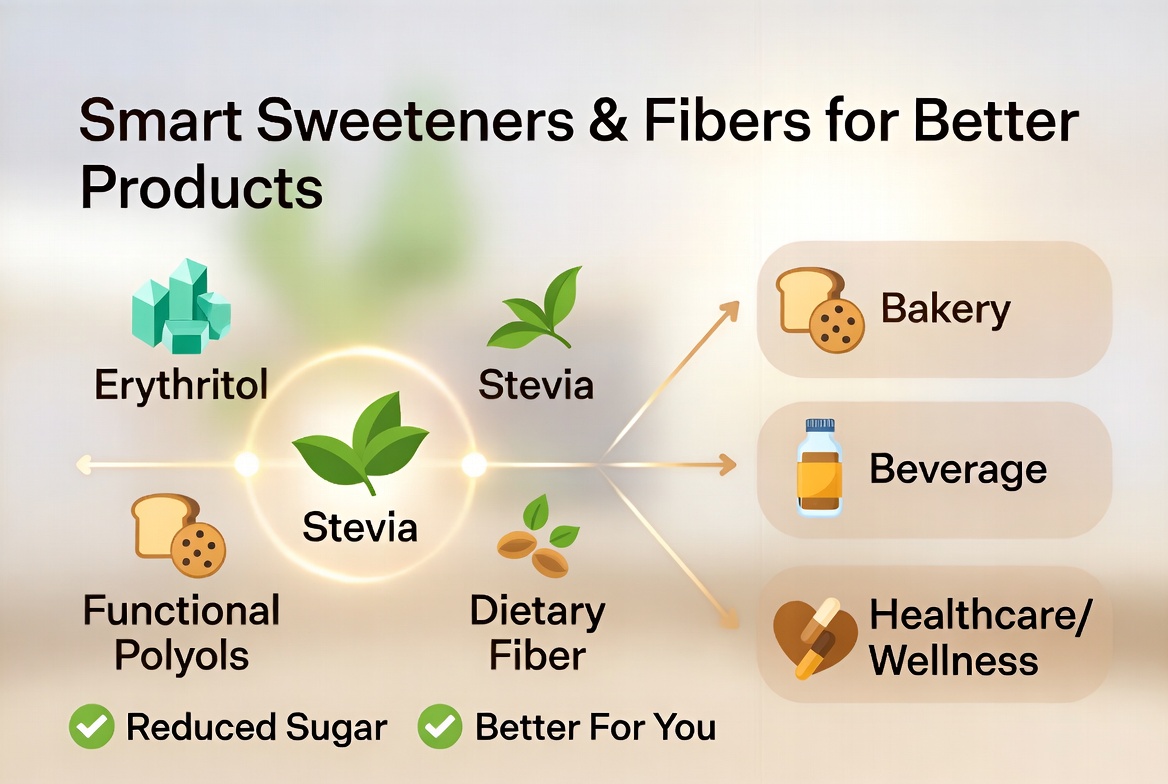
The global natural sweeteners market was valued at around USD 29.4 billion in 2025 and is projected to reach more than USD 41.7 billion by 2031, driven by a CAGR of about 6.0% between 2026 and 2031. This growth reflects strong consumer demand for sugar reduction, clean labels, and metabolic health, especially in developed markets with aging populations and rising rates of diabetes and obesity. [pmc.ncbi.nlm.nih]
For international brands, shifting from sucrose to erythritol, stevia, and other natural options is not only about calories—it is about positioning products as scientifically backed, trustworthy, and aligned with modern nutritional standards. Manufacturers that can integrate sweeteners, polyols, and fibers into coherent formulations—rather than treating them as isolated ingredients—gain a clear competitive edge. [polyols-eu]
Erythritol is a natural polyol (sugar alcohol) that delivers about 60–70% of sucrose's sweetness with virtually zero caloric value and minimal impact on blood glucose and insulin response. It is non‑cariogenic, meaning it does not promote tooth decay, making it ideal for sugar‑free and dental‑friendly formulations in bakery, confectionery, and nutritional tablets. [nutra]
Technologically, erythritol offers good solubility, a stable crystalline structure, and high heat stability; it does not caramelize like sucrose and only slightly participates in Maillard browning reactions. As a result, it tends to produce lighter‑colored baked goods with compact dough and controlled moisture—features that can be either an advantage or a challenge depending on the product concept. [bakerpedia]
From an R&D standpoint, erythritol is used as both a bulk sweetener and a structural component in reduced‑sugar breads, rolls, cakes, cookies, and functional bakery items. In sponge cakes, for instance, blending erythritol with dried ingredients at around 10% can improve baking stability, shelf life, and cake volume, while achieving a finer crumb structure. [polyols-eu]
In fillings and creams, erythritol at higher levels (such as 60%) can provide a characteristic cooling effect, help mask fatty mouthfeel, and significantly cut caloric content—provided particle size and crystallization behavior are carefully controlled. Because erythritol exhibits different melting behavior than sucrose, it often requires co‑formulation with other polyols like maltitol to refine sweetness intensity, humectancy, and softness of the final product. [bakerpedia]
Original insight – formulation tip:
In practical projects, I have seen that combining erythritol with dietary fibers (e.g., inulin) or hydrocolloids can both soften the cooling sensation and stabilize water activity, reducing texture fluctuations during long‑distance export logistics. This is especially relevant for OEM partners shipping cakes, bars, or functional biscuits from Asia to North America or Europe. [nutra]
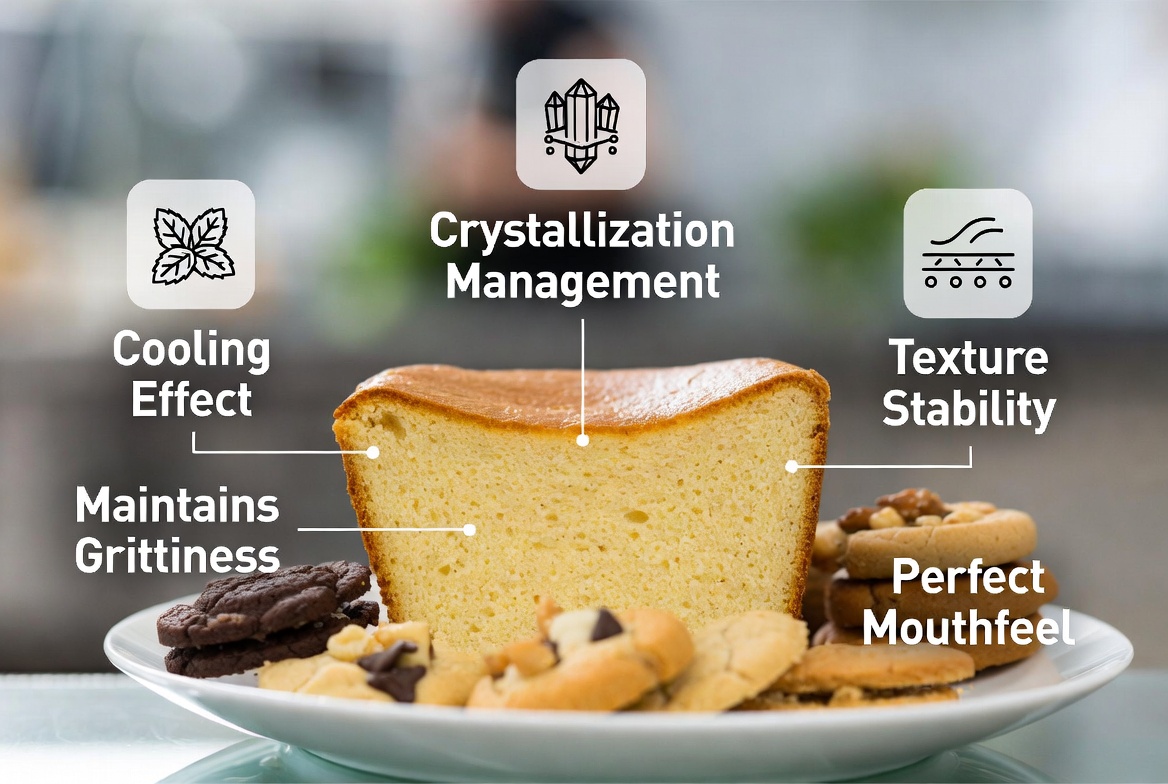
Your original copy correctly notes that "proper formulation can help reduce cooling effects and crystallization while maintaining good texture and sweetness." This is a crucial operational reality in bakery and confectionery plants. [polyols-eu]
The cooling effect of erythritol comes from its heat of solution and medium solubility, which can be very pleasant in mint chocolate but distracting in plain sponge cakes or tablets. To manage this, formulators typically: [nutra]
- Blend erythritol with polyols that have lower cooling, such as maltitol, to balance mouthfeel. [polyols-eu]
- Incorporate fibers like inulin that exhibit positive heat of solution, mitigating the cold sensation. [nutra]
- Adjust particle size distribution to influence dissolution rate and perceived cooling on the tongue. [bakerpedia]
Emerging technologies even co‑melt erythritol with specific hydrocolloids (e.g., carrageenan) to reduce its cooling effect, providing new options for bakery and confectionery applications where "neutral" sweetness is preferred. [polyols-eu]
Erythritol's rapid crystallization and low hygroscopicity are double‑edged; they support good texture and reduced stickiness but can create graininess if not managed correctly in fillings, fudges, and fondants. In bakery applications, this crystallization behavior translates into more compact dough and improved moisture control, but the risk of uneven texture remains when water activity and cooling curves are not tuned. [bakerpedia]
For OEM projects, this means that pilot‑scale trials must track:
1. Dissolution and recrystallization patterns across baking and cooling stages. [bakerpedia]
2. Shelf‑life behavior under realistic storage conditions and export temperatures. [nutra]
3. Interaction with other solids (starches, proteins, fibers) that affect water migration and firmness. [pmc.ncbi.nlm.nih]
Your original statement—that "Stevia may produce a slight bitter or lingering aftertaste" and that this can be improved by blending with erythritol, adjusting acidity, or using flavor modulation—is fully aligned with global industry practice. [pmc.ncbi.nlm.nih]
High‑potency sweeteners like stevia often lack mouthfeel and can introduce bitterness or astringency at higher dosages. Erythritol at low concentrations (typically 1–2%) can round the sweetness profile, making it more sugar‑like while adding body and masking unwanted off‑tastes. [pmc.ncbi.nlm.nih]
A practical approach is to design tri‑layered sweetness systems:
- Stevia for intensive sweetness and calorie reduction. [pmc.ncbi.nlm.nih]
- Erythritol for bulk, mouthfeel, and cooling moderation. [polyols-eu]
- Acidity and flavor modulation (masking flavors, sweetness enhancers) to smooth the finish. [pmc.ncbi.nlm.nih]
From an expert standpoint, the most successful OEM projects treat sweetness as a sensory curve, not a single number in Brix or sucrose equivalence. Detailed sensory panels are critical to tune this curve for different markets (e.g., sweeter profiles in some Asian markets versus more moderate sweetness in parts of Europe).
Adjusting acidity is a powerful but often underestimated tool for refining stevia's aftertaste. The right pH range can significantly reduce bitterness and enhance perceived freshness in beverages, bakery fillings, and chewable tablets. [pmc.ncbi.nlm.nih]
Modern flavor modulation technologies—such as sweetness enhancers, bitterness blockers, and "mouthfeel boosters"—allow formulators to:
- Reduce stevia dosage while preserving sweetness. [pmc.ncbi.nlm.nih]
- Suppress specific bitter notes that appear at high concentrations. [pmc.ncbi.nlm.nih]
- Enhance the perception of round, sugar‑like sweetness without adding sugars. [polyols-eu]
For healthcare tablets and functional confectionery, combining stevia–erythritol systems with targeted flavor modulation can transform a formulation from clinically acceptable to genuinely enjoyable, which directly improves patient or consumer compliance.
Beyond erythritol and stevia, your core competence includes functional polyols and dietary fibers, which are essential for designing products that meet claims like "low glycemic," "high fiber," or "weight management friendly." [nutra]
Polyols like erythritol contribute sweetness and texture with minimal blood sugar impact, while fibers such as inulin or resistant dextrins support gut health, satiety, and reduced net carbohydrates. In baked goods and healthcare tablets, carefully balancing these components can: [nutra]
- Lower caloric density without sacrificing structure. [nutra]
- Improve digestive tolerance compared with higher‑calorie sugar systems. [nutra]
- Enable claims around glycemic control and dental health, especially when erythritol is a main sweetener. [polyols-eu]
From an OEM/ODM standpoint, the real value is in system design—sweeteners, polyols, fibers, and flavors arranged to meet both regulatory targets and sensory expectations.
As a specialized factory serving overseas manufacturers, your OEM/ODM services are not just about contract production; they are about co‑developing market‑ready solutions that align with local regulations, taste preferences, and brand narratives. [polyols-eu]
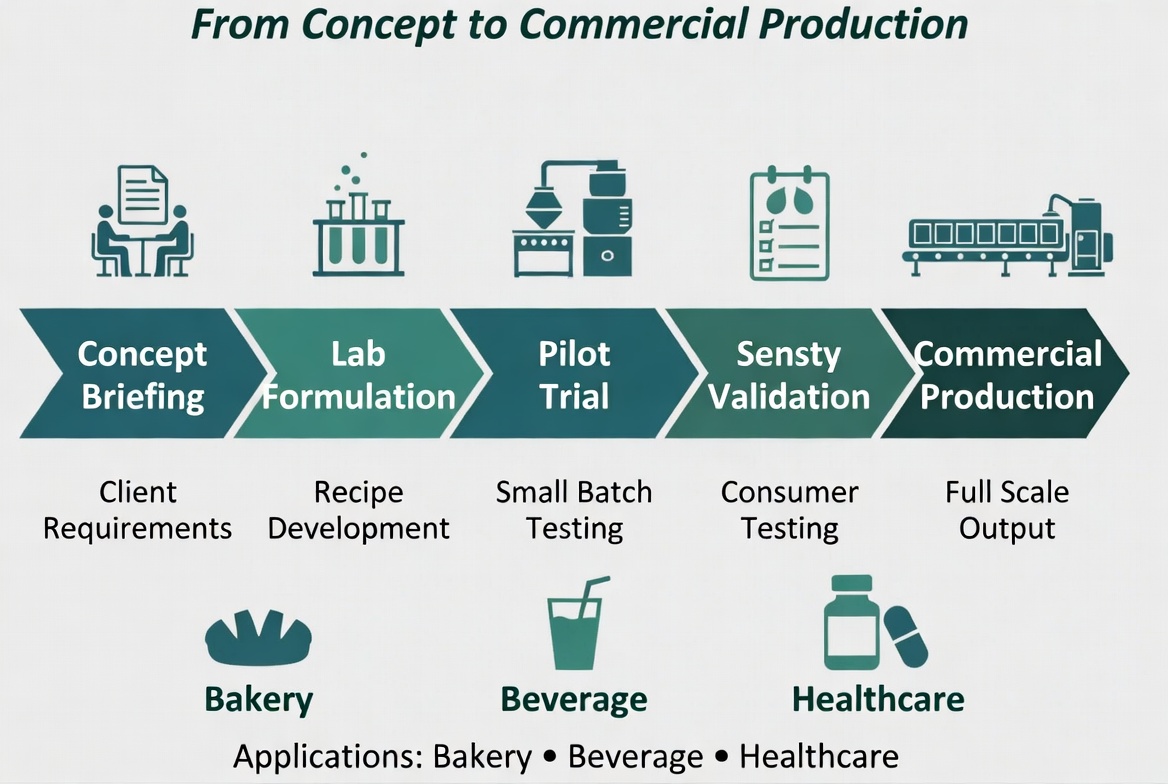
Based on industry best practices, a robust natural sweetener project typically follows these steps:
1. Requirement mapping: Define target markets, claims (sugar‑free, keto, high‑fiber), and regulatory constraints. [deepmarketinsights]
2. Ingredient architecture: Select and dose erythritol, stevia, other polyols, and fibers to build the desired nutritional and sensory profile. [polyols-eu]
3. Prototype and sensory validation: Conduct iterative trials to balance sweetness curve, cooling effect, browning, and texture stability. [bakerpedia]
4. Scale‑up and quality control: Translate lab formulations into stable processes, with clear SOPs and QC parameters for international shipment. [bakerpedia]
In practice, OEM partners benefit most when they treat your factory as a solution provider rather than purely a supplier—bringing their market insight together with your formulation and process expertise.
If you are a bakery, beverage, or healthcare manufacturer looking to reduce sugar while protecting taste and texture, partnering with an expert OEM/ODM factory can dramatically shorten your development timeline and decrease formulation risk. [nutra]
You can collaborate with our team to:
- Co‑design erythritol‑based bakery recipes with controlled cooling and crystallization. [bakerpedia]
- Develop stevia–erythritol systems with minimized aftertaste and optimized sweetness curves. [polyols-eu]
- Integrate functional polyols and dietary fibers into tablets, functional foods, and beverages tailored to your regulatory and marketing needs. [pmc.ncbi.nlm.nih]
Reach out to our formulation specialists to discuss your next reduced‑sugar product line, and turn natural sweeteners into a strategic advantage rather than a technical challenge. [deepmarketinsights]
Erythritol is approved as a food additive in regions such as the US (FDA) and EU (E 968) and is considered safe for long‑term consumption when used within regulatory guidelines. It is non‑cariogenic and has minimal impact on blood glucose and insulin, making it suitable for diabetic and low‑carb products. [nutra]
Usage levels depend on product type and local regulations, but typical inclusion rates range from around 7% in cookies and cakes to higher levels in bakery fillings, often combined with other polyols to optimize sweetness and texture. Pilot trials are essential to adapt these guidelines to your specific recipes and processing conditions. [bakerpedia]
The most effective strategies include blending stevia with erythritol to add mouthfeel, fine‑tuning acidity to reduce bitterness, and using flavor modulation technologies that specifically target off‑notes. Sensory testing across your target consumer group is critical to confirm that the final profile meets local taste preferences. [polyols-eu]
Erythritol can replace a large portion of sugar in many applications, but due to its different melting and browning behavior, it may not perfectly mimic sucrose in every product. In many cases, a combination of erythritol, other polyols, fibers, and high‑potency sweeteners yields better overall results for texture, color, and flavor. [pmc.ncbi.nlm.nih]
Working with an experienced OEM/ODM factory provides access to ingredient know‑how, pilot equipment, and quality systems tuned to natural sweeteners and functional polyols. This reduces formulation risk, accelerates time‑to‑market, and ensures your products meet both regulatory standards and consumer expectations in your target regions. [deepmarketinsights]
1. Bakerpedia – "Erythritol | Baking Ingredients" – overview of erythritol's functionality and bakery usage patterns. [Link]
2. European Association of Polyol Producers – "Erythritol (E 968)" – regulatory status, safety, and application data. [Link]
3. Nutra – "Erythritol – Applications in the Food Industry" – technical description of bakery and broader food applications. [Link]
4. Deep Market Insights – "Natural Sweeteners Market Size, Share & Growth Report | 2031" – global market sizing and growth forecasts. [Link]
5. PubMed Central – "Erythritol as sweetener—wherefrom and whereto?" – scientific discussion of erythritol's metabolism and sweetening role. [Link]


