
Views: 232 Author: Shandong Newnature Biotechnology Co., Ltd. Publish Time: 2026-07-02 Origin: Site


Content Menu
● Global Sugar Reduction Trends Shaping Product Development
>> Low‑Sugar, Sugar‑Free and Clean‑Label – The New Normal
● Natural Sweeteners and Functional Polyols – Practical Options for Formulators
>> Stevia, Allulose and Erythritol – Key Regulatory Considerations
● Dietary Fiber and Functional Food – Beyond Sweetness
>> Gut Health, Satiety and Metabolic Support
● OEM/ODM Perspective – How We Co‑Create Sugar‑Reduced and Functional Products
>> Typical Project Flow with International Clients
● Closing Information Gaps – Latest Data and Expert Insights
>> Recent Consumption and Policy Signals Manufacturers Should Track
● Applied Strategy – How Food and Beverage Brands Can Implement Sugar Reduction
>> Step‑by‑Step Sugar Reduction Roadmap for Manufacturers
● Communicating Sugar Reduction and Functional Benefits
>> Improving Readability and Visual Impact in Product Communication
● Actionable OEM/ODM Partnership – Why Work with a Specialized Factory
● Call to Action – Co‑Develop Your Next Sugar‑Reduced, Functional Product
● FAQs on Sugar Reduction, Natural Sweeteners and OEM/ODM Services
>> FAQ 1 – Why are consumers increasingly choosing low‑sugar and sugar‑free products?
>> FAQ 2 – What are the advantages of using natural sweeteners like stevia?
>> FAQ 3 – How do dietary fibers support functional food development?
>> FAQ 4 – What should manufacturers watch in FDA and EFSA regulations on sweeteners?
>> FAQ 5 – How can OEM/ODM partners help in launching sugar‑reduced functional products?
Consumers worldwide are moving decisively toward low‑sugar, high‑functionality foods and beverages, and this shift is reshaping how manufacturers work with natural sweeteners, functional polyols, and dietary fibers. As an OEM/ODM partner embedded in this transformation, our factory's daily R&D experience gives us a front‑row view of how sugar‑reduced, clean‑label formulations are becoming a competitive necessity rather than a niche trend. [ific]
From my perspective as a food industry practitioner working with international brands, sugar reduction is no longer just about "less sweetness" – it is about smarter formulation that protects taste, texture, and regulatory compliance while delivering measurable health benefits. In this article, I will combine hands‑on OEM/ODM experience with global market data to show how natural sweeteners, functional polyols, and dietary fibers can help beverage, bakery, dairy, and healthcare brands win in the next decade of health‑driven consumption. [pmc.ncbi.nlm.nih]
Worldwide sugar intake is falling, driven by obesity, diabetes, and non‑communicable disease concerns, and by clear guidance from bodies such as WHO recommending reduced "free sugars" consumption. Recent consumer surveys show that well over half of respondents are actively concerned about sugar in their diet, and many report trying to reduce or avoid it altogether. [reilly]
Across beverages, bakery, dairy, and snacks, low‑sugar and sugar‑free launches are growing faster than conventional products, particularly in markets with strong health awareness and labeling regulations. At the same time, shoppers are prioritizing "natural" and "clean‑label" sweeteners, avoiding ingredients they perceive as artificial or overly processed. [oecd]
From daily project work with overseas clients, three expectations keep recurring:
- Clear sugar reduction claims (percentage reduction or "no added sugars"). [ific]
- Clean, pronounceable ingredient lists with natural sweeteners and fibers. [who]
- Stable sweetness profile and familiar mouthfeel, even at lower sugar levels. [pmc.ncbi.nlm.nih]
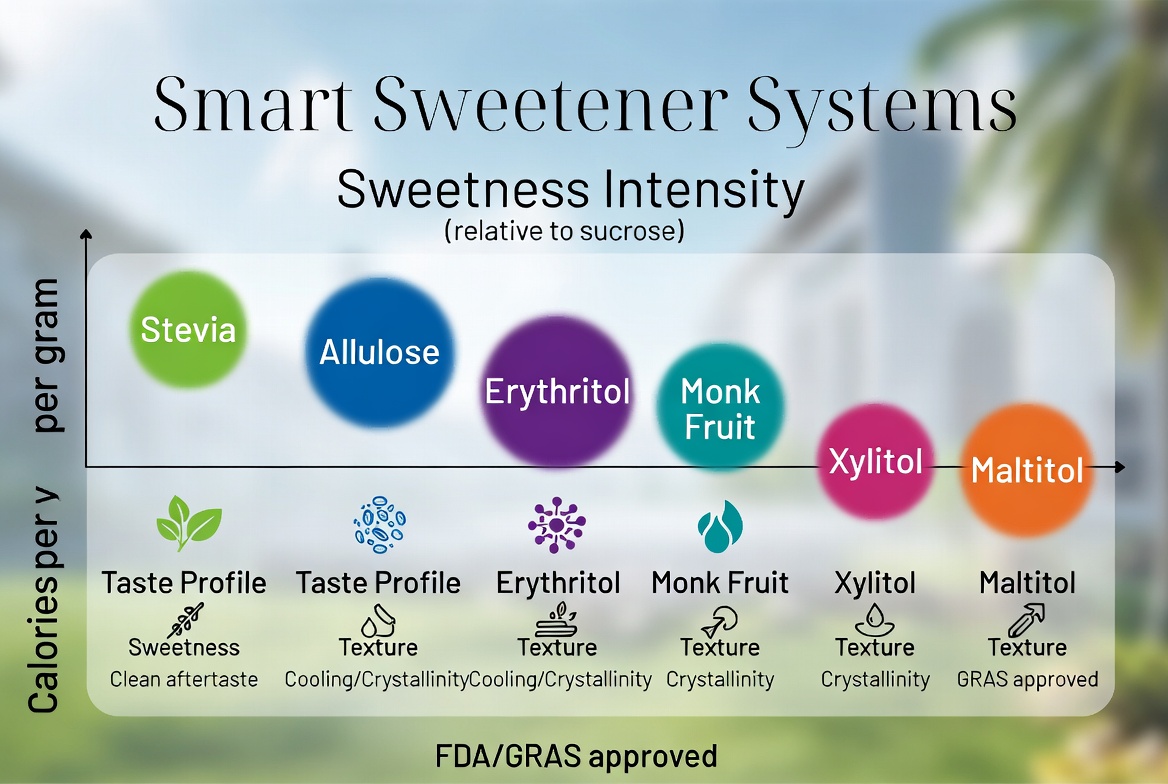
Natural sweeteners like stevia and monk fruit, and functional polyols such as erythritol, maltitol, and isomalt, allow manufacturers to reduce sugar while maintaining sweetness and bulk. In our factory, we regularly combine these ingredients in tailored blends for beverage, tablet, confectionery, and nutraceutical applications, optimizing both taste and regulatory compliance country by country. [efsa.europa]
Regulations around sweeteners evolve continuously, and staying aligned with FDA and EFSA guidance is essential for safe and marketable products. For example, the FDA has issued specific guidance allowing allulose to be excluded from total and added sugars declarations on Nutrition Facts labels, recognizing its negligible impact on blood glucose and lower caloric value. EFSA is meanwhile re‑evaluating the safety of all authorised sweeteners to ensure up‑to‑date risk assessment for European consumers. [fda]
As an OEM/ODM manufacturer, we approach sweetener selection with three priority checks:
1. Confirm approval status and usage limits for each target market (FDA, EFSA, and local regulations). [fda]
2. Align labeling strategy (e.g., "reduced sugar", "no added sugars", "with natural sweeteners") with regulatory definitions. [who]
3. Validate safety and stability through internal and third‑party testing, particularly for new combinations of sweeteners and fibers. [efsa.europa]
Global demand for functional foods is expanding as consumers focus on wellness, immunity, weight management, and gut health. Ingredients like dietary fiber, natural sweeteners, and botanical extracts show strong growth because they deliver more than sweetness: they offer physiological benefits that can be communicated through credible, evidence‑based claims. [who]
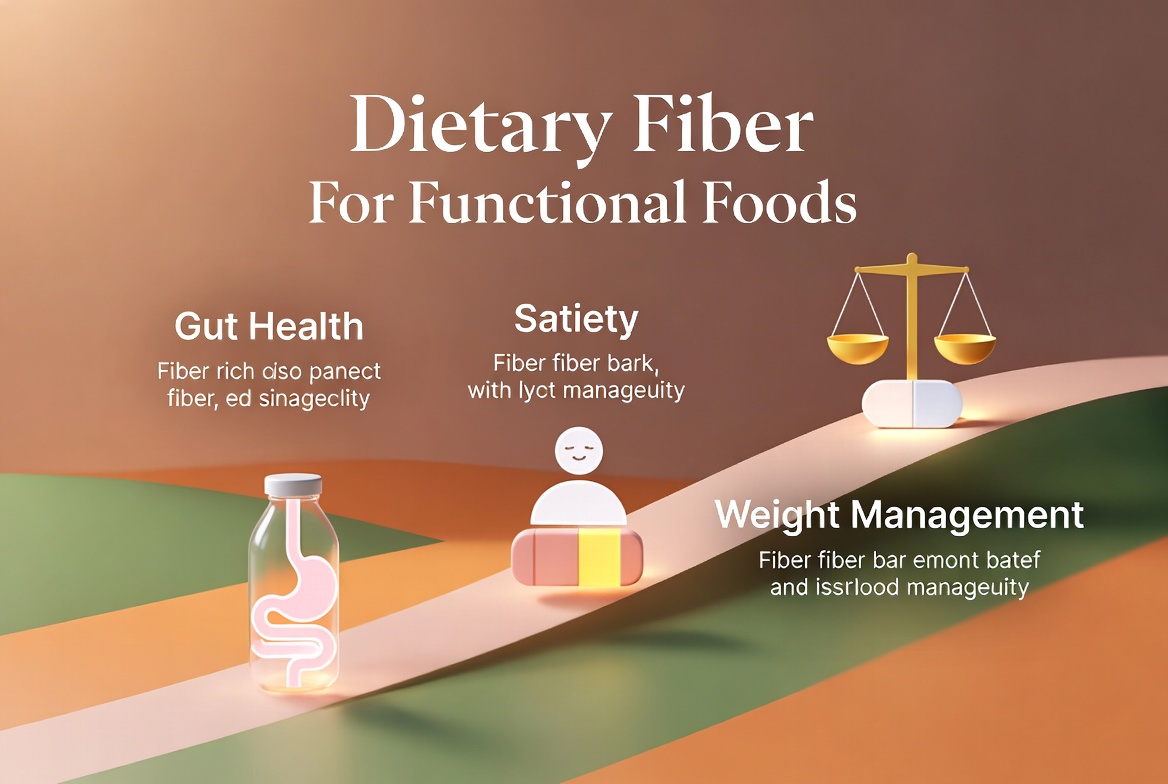
From an industry standpoint, dietary fibers play three major roles in sugar‑reduced formulation:
- Improving gut health by supporting beneficial microbiota and regularity. [who]
- Enhancing satiety, helping consumers manage calorie intake and weight. [who]
- Replacing bulk and texture lost when sugar is reduced, keeping products palatable. [pmc.ncbi.nlm.nih]
In our own projects, we see best performance when dietary fibers are integrated early in the product design stage rather than added as an afterthought. This allows us to calibrate sweetness, viscosity, and mouthfeel in parallel, which is particularly important for fiber‑enhanced beverages and chewable tablets targeted at healthcare channels. [oecd]
Working as an OEM/ODM partner for international brands, our daily work extends from concept validation to full‑scale manufacturing. We specialize in mixed sweetener systems, tablet production, and tailored formulations for food, beverage, and healthcare applications. [oecd]
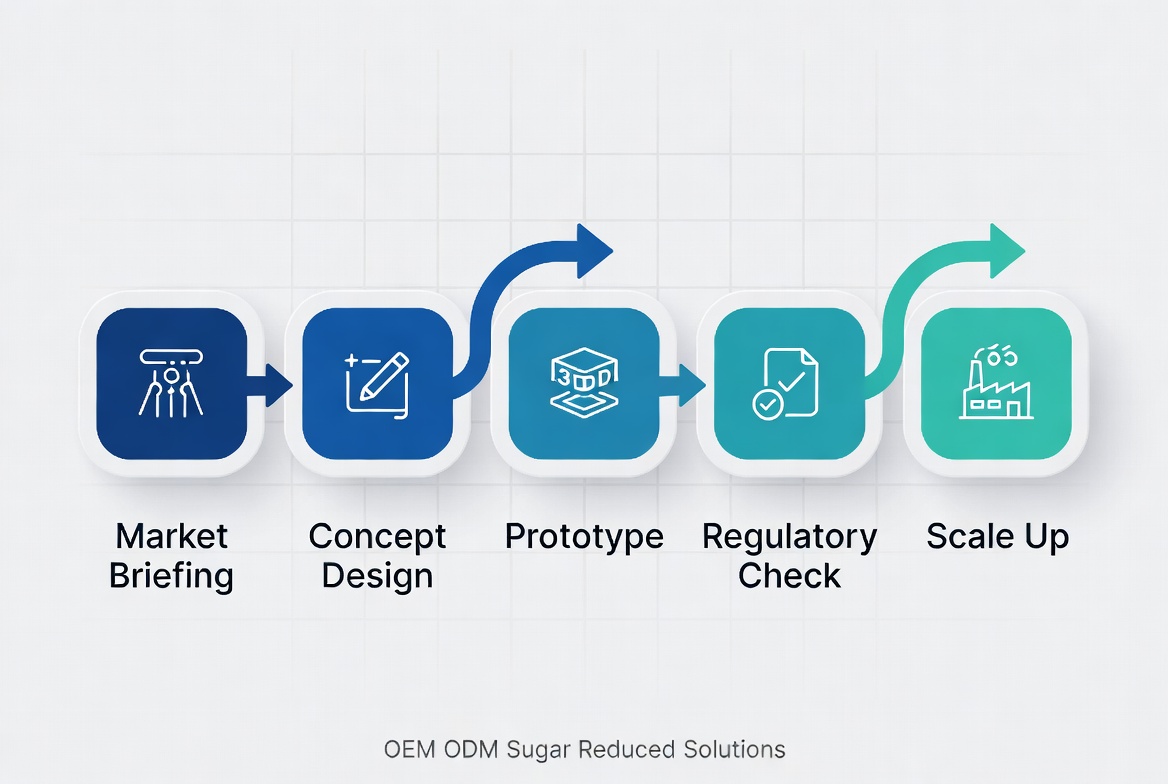
Based on repeated collaboration cycles, a practical, step‑by‑step process has emerged:
1. Market and regulatory briefing – We jointly review the target market's sugar reduction trends and regulatory constraints for sweeteners and fibers (FDA, EFSA, and local rules). [fda]
2. Concept design – We define sweetness target (e.g., 30% sugar reduction, "sugar‑free"), functional positioning (immunity, weight management, gut health), and desired label claims. [ific]
3. Prototype development – Our R&D team builds sample formulas using natural sweeteners, functional polyols, and dietary fiber, focusing on taste, texture, and stability. [pmc.ncbi.nlm.nih]
4. Sensory and stability testing – We conduct internal trials and, where necessary, third‑party testing to validate flavor, shelf life, and regulatory compliance. [efsa.europa]
5. Scale‑up and OEM/ODM production – Once approved, we move to industrial‑scale manufacturing, tablet compression, or premix blending, with full documentation for audits. [oecd]
This structured approach not only minimizes reformulation risk but also helps brands launch compliant, well‑positioned products in multiple regions simultaneously. [efsa.europa]
Many articles on sugar reduction stop at high‑level trends; they rarely offer concrete guidance on how manufacturers should respond in formula and process design. Using both external data and internal experience, three points stand out for today's decision‑makers. [ific]
New reports indicate a noticeable drop in sugar consumption in recent years, suggesting that health‑driven behavior is not just aspirational but actually reflected in purchasing decisions. WHO has also highlighted the link between excessive free sugar intake and unhealthy weight gain, obesity, and dental caries, reinforcing the case for reformulation policies in governments and corporations alike. [reilly]
For R&D and marketing teams, three practical implications follow:
- Sugar‑reduced and functionally enriched SKUs should be core, not peripheral, in product portfolios. [reilly]
- Ongoing regulatory monitoring (FDA, EFSA) is mandatory; sweetener status can change, and labeling rules are being refined. [fda]
- Transparent communication around ingredients and benefits builds trust and improves acceptance of novel sweeteners and fibers. [who]
From an industry expert viewpoint, successful sugar reduction combines science, regulation, and consumer psychology. The following practical framework has proven effective across beverage, bakery, dairy, and healthcare projects. [ific]
1. Audit current portfolio
- Map products by sugar content and category (beverages, bakery, dairy, snacks, healthcare). [pmc.ncbi.nlm.nih]
- Identify SKUs at greatest regulatory or reputational risk due to high sugar. [who]
2. Segment consumer expectations
- For each category, define desired benefits: weight management, gut health, immunity, or "clean energy". [who]
- Align sugar reduction level with taste tolerance in that segment. [ific]
3. Choose sweetener and fiber strategy
- Combine natural sweeteners (e.g., stevia) with functional polyols (e.g., erythritol) to balance sweetness and bulk. [fda]
- Add dietary fiber for texture and functional claims (e.g., gut health). [who]
4. Validate regulatory compliance
- Confirm sweetener approvals and usage limits in each market (FDA, EFSA, local authorities). [fda]
- Design labels and claims that follow guidance on free sugars and non‑nutritive sweeteners. [fda]
5. Leverage OEM/ODM manufacturing
- Partner with specialized factories that can produce premixes, tablets, or finished products at scale. [oecd]
- Use their experience to shorten development cycles and avoid common formulation pitfalls. [pmc.ncbi.nlm.nih]
From my background in content and branding, I see that product success depends not only on what is inside the formula but also on how brands communicate health and functionality. Clear structure, bolded key messages, and visual elements make complex topics easier for end users to digest. [who]
To help consumers understand sugar reduction and functional benefits more quickly, manufacturers can:
- Use short, direct statements about sugar content and sweetness source. [ific]
- Highlight functional benefits such as "supports gut health" or "helps manage calorie intake" alongside dietary fiber content. [who]
- Add simple charts or infographics comparing sugar and calorie levels versus traditional formulations. [reilly]
In a typical brand website or brochure, the following visual assets work well:
- A bar chart showing sugar reduction percentage and calorie difference per serving. [reilly]
- An ingredient breakdown graphic focusing on natural sweeteners and fibers. [pmc.ncbi.nlm.nih]
- A process infographic explaining how OEM/ODM partners ensure safety and compliance. [efsa.europa]
For brands seeking rapid, compliant entry into the low‑sugar and functional food segments, working with a specialized OEM/ODM factory offers clear advantages. Our experience with natural sweeteners, functional polyols, and dietary fibers allows us to translate health trends and regulatory changes into practical formulation solutions. [efsa.europa]
A focused OEM/ODM partner can help you:
- Design sugar‑reduced, clean‑label formulas tailored to category and market requirements. [who]
- Navigate FDA and EFSA updates around sweeteners, labeling, and usage limits. [fda]
- Deliver scalable production of tablets, premixes, or finished products with consistent quality and documentation. [oecd]
If your brand is planning to enter or expand in low‑sugar beverages, bakery, dairy, snacks, or health supplements, now is the right moment to initiate R&D collaboration and build a differentiated, future‑ready portfolio. [reilly]
As global sugar reduction and functional food trends accelerate, the opportunity for health‑oriented innovation is substantial – but so are the regulatory and formulation challenges. By partnering with a factory that specializes in natural sweeteners, functional polyols, and dietary fiber, you can move from concept to compliant, scalable product more quickly and with greater confidence. [who]
If you are a food, beverage, or healthcare manufacturer looking to:
- Launch low‑sugar or sugar‑free products with natural sweeteners. [pmc.ncbi.nlm.nih]
- Integrate functional polyols and dietary fiber for added health benefits. [who]
- Secure OEM/ODM support for mixed sweetener development and tablet production. [oecd]
We invite you to start a technical discussion with our R&D and regulatory teams and explore how we can co‑create your next generation of healthier, high‑performance products. [efsa.europa]
Consumers are becoming more aware of the links between excessive sugar intake and health issues such as obesity, diabetes, and dental problems, supported by evidence‑based guidelines from organizations like WHO. As a result, they prefer products that offer sweetness with lower sugar content, especially when combined with clear information on ingredients and health benefits. [who]
Natural sweeteners such as stevia provide intense sweetness with very low or zero calories, making them useful for sugar reduction strategies. They also align with consumer demand for cleaner, more recognizable ingredients, helping brands maintain taste while improving nutritional profiles. [fda]
Dietary fibers promote gut health, contribute to satiety, and can help manage overall calorie intake, positioning products within the broader wellness and functional food category. In formulation, they also replace bulk and improve texture when sugar is reduced, supporting product quality in beverages, bakery, and tablet formats. [who]
Manufacturers need to track approval status, usage limits, and labeling rules for sweeteners such as allulose, stevia, and erythritol, as guidance can change over time. This includes understanding how certain sweeteners are counted toward sugar and calorie declarations on labels, and how this affects claims like "reduced sugar" or "no added sugars". [fda]
Specialized OEM/ODM partners bring formulation expertise, regulatory knowledge, and manufacturing capacity, allowing brands to reduce development risk and time‑to‑market. They can co‑design mixed sweetener systems, integrate dietary fibers, perform stability testing, and deliver scalable production of tablets, premixes, or finished goods that meet international standards. [efsa.europa]
1. International Food Information Council. "2025 Food & Health Survey: A Focus on Sugars & Sweeteners." [ific]
2. World Health Organization. "Sugars intake for adults and children – Guideline." [who]
3. World Health Organization (Europe). "Sugars factsheet." [who]
4. EFSA. "Sweeteners – safety evaluation and re‑evaluation of authorised sweeteners." [efsa.europa]
5. U.S. FDA. "The Declaration of Allulose and Calories from Allulose on Nutrition and Supplement Facts Labels – Draft Guidance." [fda]
6. U.S. FDA. "Aspartame and Other Sweeteners in Food." [fda]
7. Global trends in added sugars and non‑nutritive sweetener use in packaged food and beverages (scientific article). [pmc.ncbi.nlm.nih]
8. Reilly. "New Report Shows Sugar Consumption Down by 12% in 2025." [reilly]
9. OECD‑FAO. "Agricultural Outlook 2025‑2034 – Sugar chapter." [oecd]


