
Views: 288 Author: Shandong Newnature Biotechnology Co., Ltd. Publish Time: 2026-07-03 Origin: Site


Content Menu
● Why Natural Sweeteners Matter in Today's Health-Conscious Market
● Synergistic Sweetener Systems: Beyond Single Ingredients
>> Erythritol and Stevia: Creating Sugar-Like Sweetness
>> Functional Polyols and Fibers in Synergy
● Stability Studies: Making Reduced-Sugar Products Reliable
>> Key Factors in Sweetener Stability
>> Why Stability Data Builds Brand Trust
● Clean Label Solutions: Meeting Modern Consumer Expectations
>> Principles of Clean-Label Sweetener Formulation
>> Clean Label in Healthcare and Nutraceuticals
● Global Market Context: Why OEM/ODM Sweetener Solutions Are in Demand
● Practical Steps for Developing a Custom Sweetener Blend (Expert Guidance)
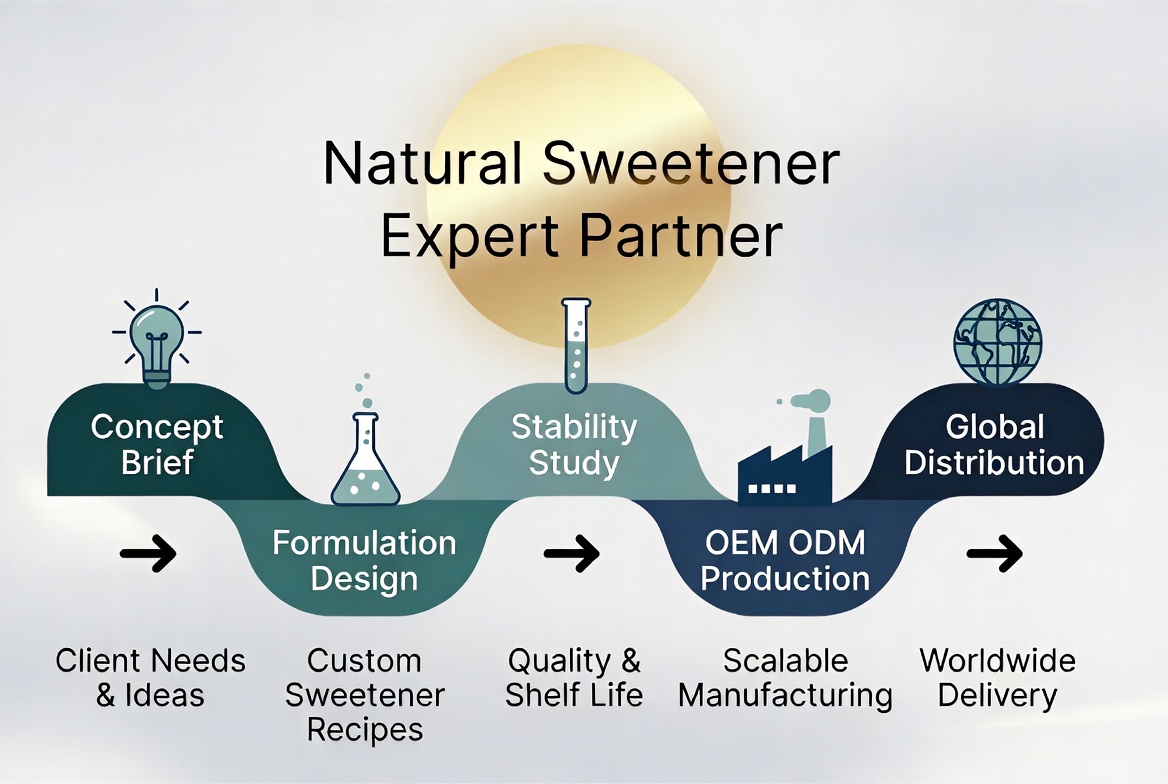
>> Step 1: Define Application and Sensory Targets
>> Step 2: Design Synergistic Sweetener and Polyol/Fiber Matrix
>> Step 3: Conduct Stability and Scale-Up Studies
● Example Table: Key Sweetener and Solution Features
● OEM/ODM Services: From Lab Concept to Finished Product
● Call to Action: Partner With a Natural Sweetener Specialist
● FAQ – Natural Sweeteners, Synergy and OEM/ODM
>> FAQ 1: Why combine erythritol with stevia instead of using just one sweetener?
>> FAQ 2: How do stability studies benefit my brand?
>> FAQ 3: What makes a sweetener solution "clean label"?
>> FAQ 4: Can natural sweeteners be used in healthcare tablets and supplements?
>> FAQ 5: What is the advantage of OEM/ODM collaboration for sweetener-based products?
Our factory specializes in natural sweeteners , functional polyols, and dietary fibers for food, beverage, and healthcare manufacturers, providing custom sweetener blends, tablet production, and OEM/ODM services that meet modern clean-label and sugar-reduction demands. From both a personal practitioner's perspective and an industry expert lens, this article explains how synergistic sweetener systems, stability studies, and clean-label formulation can help overseas brands win in a fast-evolving health-conscious market. [nutritionaloutlook]
The global shift away from high sugar intake is no longer a niche trend—it is now the dominant driver of product innovation in food, beverage and healthcare categories. Rising rates of obesity, diabetes and metabolic syndrome have pushed both regulators and consumers to demand reduced-sugar, low-calorie, and "better-for-you" formulations that still deliver familiar taste and texture. [pmc.ncbi.nlm.nih]
As a Chinese factory focused on natural sweeteners, multifunctional polyols (such as erythritol) and dietary fibers, we see this shift every day in overseas R&D briefs—from beverage brands in Europe to nutraceutical tablet producers in North America. They are looking not only for ingredients, but for complete health solutions: optimized sweetness systems, stable formulations, and trustworthy OEM/ODM partners who understand regulatory and clean-label requirements in their destination markets. [24chemicalresearch]
When we work with overseas manufacturers, one of the first misconceptions we address is the idea that one "perfect" sweetener can replace sugar in all applications. In reality, modern formulations benefit most from synergistic sweetener blends, where different ingredients balance each other's strengths and weaknesses. [dgsens]
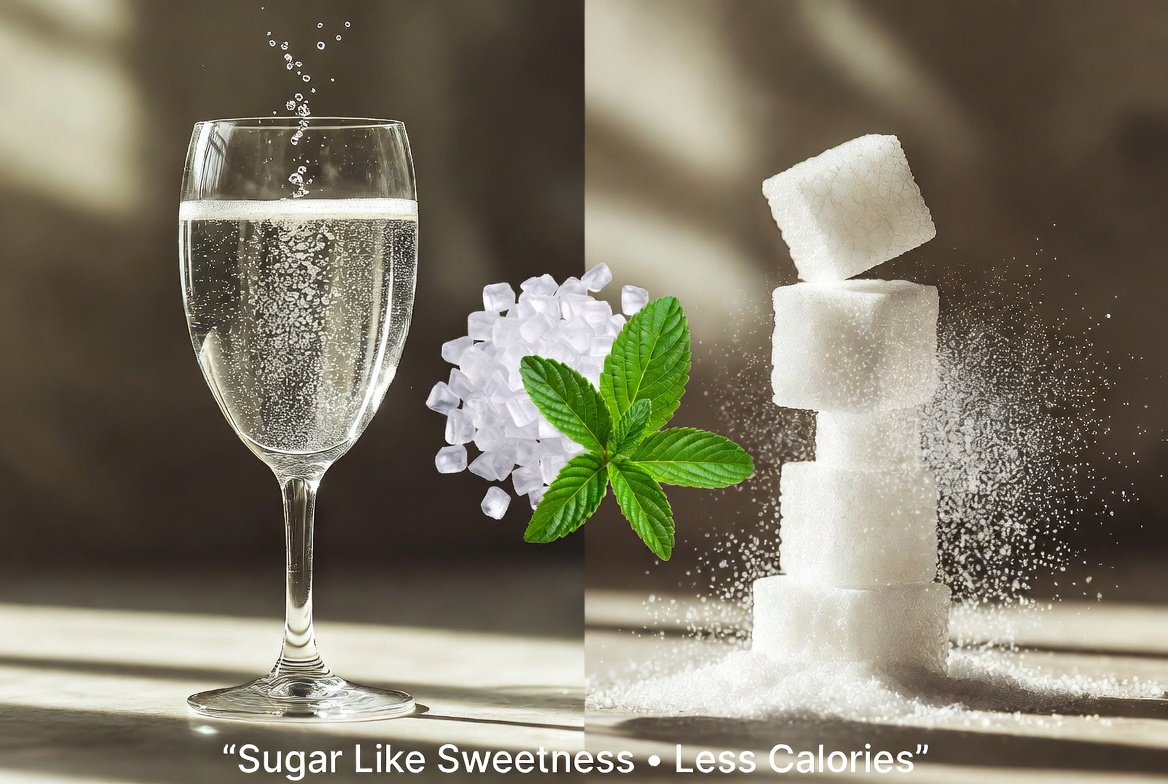
A classic example is the combination of erythritol and stevia. Stevia provides intense sweetness with near-zero calories, but can have a lingering aftertaste, while erythritol contributes bulk, mouthfeel, and a more rounded sweetness curve. [greenspringshop]
In our projects for beverages and bakery products, we often use carefully calibrated erythritol–stevia ratios to: [nutritionaloutlook]
- Create a more sugar-like sweetness profile, closer to sucrose in onset and decay.
- Reduce bitterness or metallic aftertaste sometimes associated with high-purity stevia.
- Improve mouthfeel and body in low- or no-sugar beverages.
- Optimize cost, since erythritol can reduce the overall usage level of more expensive high-intensity sweeteners.
As recent research and industry experience show, blended sweetener systems frequently outperform single sweeteners in sensory performance and cost efficiency, especially in complex matrices such as functional drinks, flavored dairy and baked goods. [pmc.ncbi.nlm.nih]
Beyond erythritol, functional polyols (like xylitol, maltitol and isomalt) and dietary fibers (such as inulin and resistant dextrins) can be layered with natural sweeteners to achieve multi-dimensional benefits. [marketsandmarkets]
In our factory's formulation practice, such combinations can: [dgsens]
- Support texture and bulk when sugar is removed.
- Improve digestive comfort when used in appropriate doses and balanced with fibers.
- Enhance perceived creaminess or viscosity in dairy or plant-based beverages.
- Contribute to prebiotic or gut-health positioning when fibers are selected strategically.
These synergistic systems are particularly attractive to international manufacturers aiming for "reduced sugar + added functional benefits" in one product concept. [pubmed.ncbi.nlm.nih]
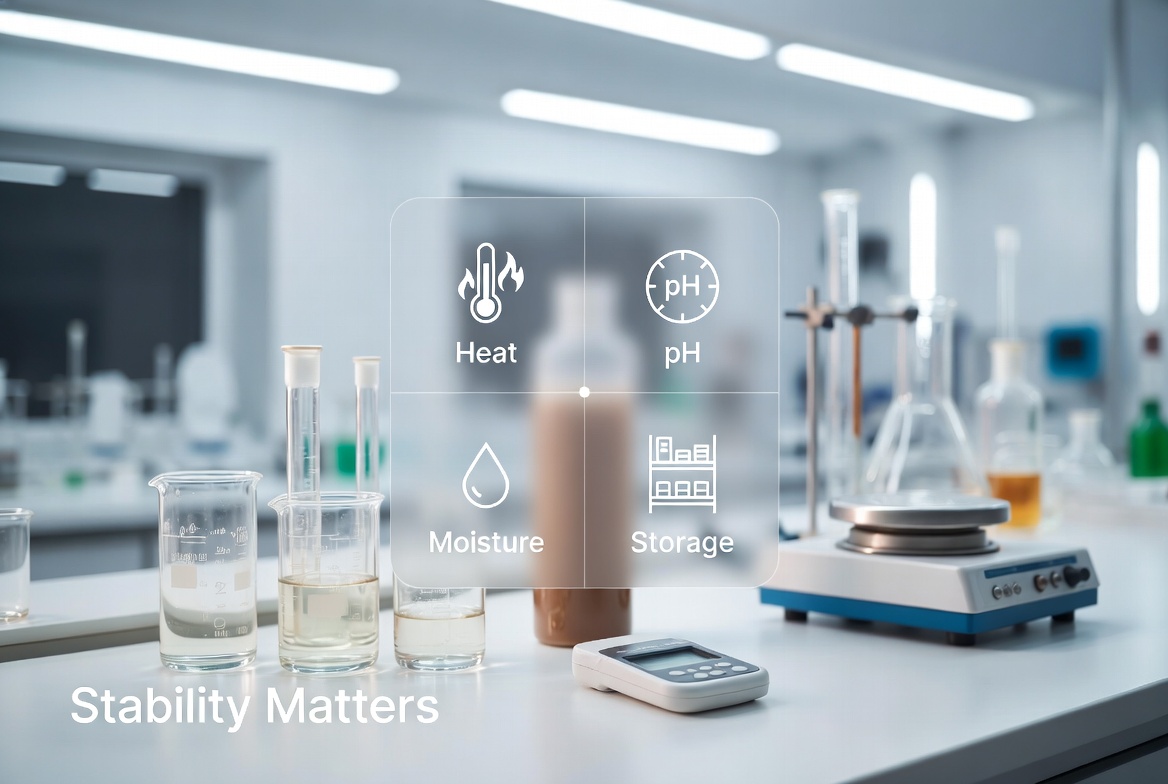
From both a technical and business perspective, sweetener stability studies are non-negotiable for serious OEM/ODM projects. A sweetener system that tastes great in the lab can still fail in the real world if it is not stable under heat, pH, moisture and storage conditions typical of the final product. [pubmed.ncbi.nlm.nih]
Our R&D team routinely conducts stability studies focusing on these critical parameters: [pmc.ncbi.nlm.nih]
- Heat: Baking, UHT treatment, pasteurization and hot-fill processes can degrade some sweeteners or alter their sweetness profile.
- pH: Acidic environments (e.g., soft drinks, vitamin C beverages) may reduce sweetness intensity or create off-flavors in certain sweeteners.
- Moisture and water activity: These influence crystallization, hygroscopic behavior and texture, especially in bakery, confectionery and tablets.
- Storage conditions: Light, oxygen and temperature fluctuations can impact shelf life and sensory performance over time.
For our overseas partners, we typically design application-specific stability protocols, e.g., testing erythritol–stevia blends in a high-acid energy drink over six months, or evaluating tablet hardness and disintegration times under humid storage. The outcome is a data-backed formula that can be scaled confidently. [dgsens]
From an E-E-A-T perspective, demonstrating rigorous stability studies directly supports "Experience" and "Expertise". Brands can communicate to their customers that the product has been tested under realistic conditions and will deliver consistent sweetness, texture and shelf life. [marketsandmarkets]
For OEM/ODM clients, access to detailed stability data facilitates: [marketsandmarkets]
- Faster regulatory submissions and internal quality approvals.
- Reduced risk of product recalls or sensory complaints.
- Clear technical documentation for future line extensions.
This technical transparency is a major differentiator in competitive B2B markets where many suppliers still offer only generic specifications without robust application-level data. [datamintelligence]
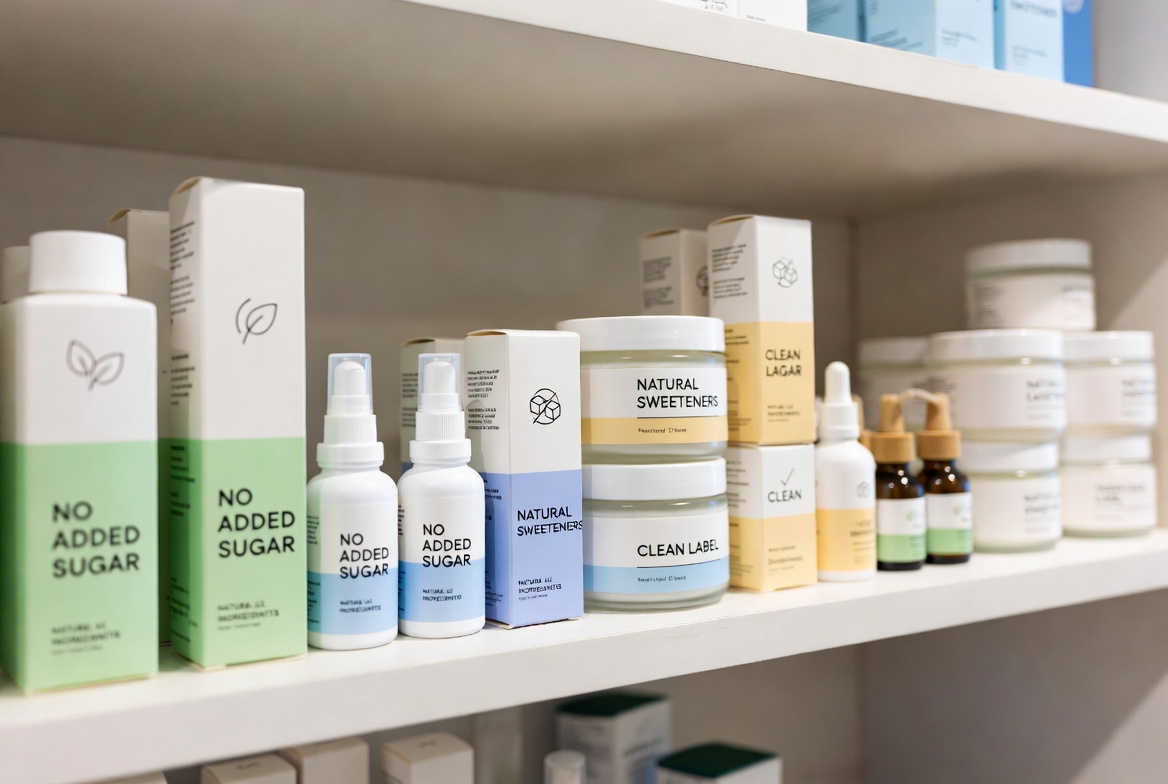
Globally, consumers increasingly prefer products with simple, recognizable ingredients and clear labeling. From our own project experience, this preference appears in creative briefs as requests like "no artificial sweeteners," "plant-based sweetening system" or "short ingredient list." [globenewswire]
A clean-label sweetener solution is built around several core principles: [globenewswire]
- Natural sweeteners: Using plant-derived options such as stevia, monk fruit or naturally occurring polyols like erythritol.
- Fewer additives: Minimizing artificial colors, flavors and unnecessary stabilizers.
- Transparent formulations: Ingredient names that consumers can understand, supported by clear communication about origin and function.
In our factory, we help international brands design clean-label sweetener blends that still maintain the required sweetness profile, mouthfeel and functional stability. This often involves creative combinations of natural sweeteners, fibers and minimal processing aids that stay within regional regulatory frameworks. [nutritionaloutlook]
The clean-label trend is also reshaping healthcare and nutraceutical products, including tablets, chewables and functional powders. Patients and health-conscious consumers increasingly prefer supplements that avoid artificial sweeteners while keeping sugar and calories low. [globenewswire]
Our tablet production lines therefore focus on: [pmc.ncbi.nlm.nih]
- Low-calorie, natural sweetener systems for vitamins and mineral tablets.
- Balanced polyol–fiber matrices to support tablet integrity and mouthfeel.
- Label-friendly excipients that satisfy both regulatory and consumer transparency requirements.
This combination allows healthcare brands to position products as both effective and aligned with modern clean-label expectations. [globenewswire]
Market data clearly shows that natural sweeteners and reduced-sugar solutions are in long-term growth mode. Recent reports indicate that the global natural sweeteners market is expanding steadily, driven by regulatory measures, consumer awareness and rapid innovation in both food and healthcare sectors. [24chemicalresearch]
For overseas manufacturers, collaborating with specialized factories that can provide turnkey sweetener systems plus OEM/ODM production offers significant advantages: [giiresearch]
- Faster time-to-market for new low-sugar or clean-label products.
- Access to localized ingredient sourcing and cost-optimized formulation.
- Technical support covering synergy, stability and regulatory compliance.
Our own role in this ecosystem is to combine practical manufacturing experience, up-to-date market knowledge and deep formulation expertise to help brands navigate the complex landscape of sweeteners, fibers and functional polyols. [datamintelligence]
Based on our day-to-day project work with international clients, the most successful formulations follow a structured development approach. [nutritionaloutlook]
Before any lab work starts, we work with clients to clarify: [nutritionaloutlook]
1. Product category: beverage, bakery, confectionery, tablet, powder drink, etc.
2. Sugar-reduction target: e.g., "30% sugar reduction" vs "zero added sugar."
3. Desired sensory profile: sweetness intensity, onset, mouthfeel, aftertaste tolerance.
4. Regulatory and market constraints: regions to be launched, label claims, sweetener approvals.
A clear brief ensures that the chosen sweetener system is purpose-built, not generic. [pmc.ncbi.nlm.nih]
Using our experience and available literature, we select candidate sweeteners and polyols for initial trials. Typical design considerations include: [dgsens]
- Pairing erythritol with stevia for sugar-like sweetness and improved mouthfeel.
- Adding dietary fiber to support texture, gut-health positioning and clean-label messaging.
- Adjusting ratios to meet target sweetness intensity and caloric content.
These prototypes are then evaluated in pilot batches of the actual product format (e.g., carbonated drink, soft-baked bar, chewable tablet). [dgsens]
Promising prototypes move to structured stability and scale-up trials. We examine: [pubmed.ncbi.nlm.nih]
- Sweetness retention and flavor integrity over the expected shelf life.
- Physical stability (no unwanted crystallization, phase separation or tablet breakage).
- Performance under realistic logistics conditions (temperature changes, transport vibration).
Only formulations that pass these tests progress to commercial-scale OEM/ODM production, supported by full documentation and quality controls. [pmc.ncbi.nlm.nih]
Below is a simplified table illustrating how different sweetener-related solutions address typical manufacturer needs. [nutritionaloutlook]
| Solution type | Main components | Key benefits | Typical applications |
|---|---|---|---|
| Synergistic sweetener blend | Erythritol + stevia | Sugar-like sweetness, reduced aftertaste, improved mouthfeel, cost optimization (nutritionaloutlook) | Beverages, bakery, functional drinks (nutritionaloutlook) |
| Functional polyol–fiber matrix | Polyols (e.g., erythritol) + dietary fibers | Texture and bulk support, potential digestive and prebiotic benefits (pmc.ncbi.nlm.nih) | Bars, meal replacements, tablets (pmc.ncbi.nlm.nih) |
| Clean-label sweetener system | Natural sweeteners + minimal additives | Simple label, consumer-friendly ingredients, maintained taste and functionality (pmc.ncbi.nlm.nih) | Health drinks, nutraceutical tablets, kids' products (pmc.ncbi.nlm.nih) |
Finally, many overseas partners choose to outsource both formulation and manufacturing to specialized factories like ours. By integrating R&D, pilot testing and large-scale production under one roof, OEM/ODM services help brands launch complex reduced-sugar and clean-label products with confidence. [giiresearch]
Our typical OEM/ODM collaboration includes: [marketsandmarkets]
- Co-developing custom sweetener blends tailored to the client's taste and regulatory needs.
- Producing finished tablets, powdered blends or pre-mixes ready for packaging in the destination market.
- Providing technical documentation, stability data and ongoing support for line extensions or reformulations.
For brands competing in the food, beverage and healthcare sectors, partnering with a natural sweetener expert is often the fastest path to high-quality, compliant and market-ready health-focused products. [datamintelligence]
If you are a food, beverage or healthcare manufacturer seeking to reduce sugar, improve label transparency and launch innovative functional products, collaborating with an experienced natural sweetener OEM/ODM partner in China can significantly accelerate your roadmap. [marketsandmarkets]
Our team can help you: [nutritionaloutlook]
- Design synergistic sweetener blends tailored to your market and sensory targets.
- Conduct application-specific stability studies to ensure reliable shelf life.
- Develop clean-label tablet and powder formulations aligned with modern consumer expectations.
Contact us to share your project requirements, request sample formulations, or schedule a technical consultation, and we will work with you to transform your next product concept into a commercially viable, health-oriented solution. [giiresearch]
Blending erythritol with stevia creates a more sugar-like taste curve, reduces stevia's potential aftertaste, adds mouthfeel, and can lower overall formulation cost compared with using stevia alone. The combination is particularly effective in beverages and bakery products where texture and balanced sweetness are critical. [greenspringshop]
Stability studies ensure that your sweetened product maintains consistent sweetness, texture and shelf life under real-world conditions such as heat, pH, moisture and storage. This reduces risk of sensory complaints, supports regulatory compliance, and builds consumer trust in your reduced-sugar or clean-label positioning. [marketsandmarkets]
A clean-label sweetener solution uses natural, recognizable ingredients, minimizes artificial additives, and presents formulations transparently so consumers can understand what they are consuming. It balances health-conscious demands with the need for good taste and functional performance in the final product. [globenewswire]
Yes, natural sweeteners and functional polyols can be successfully used in tablets, chewables and powdered supplements to reduce sugar while maintaining palatability. When combined with carefully chosen fibers and excipients, they also support tablet integrity, mouthfeel and clean-label requirements in healthcare products. [marketsandmarkets]
OEM/ODM collaboration allows you to leverage the experience, infrastructure and data of a specialized natural sweetener manufacturer, shortening development timelines and lowering technical risk. You receive not only ingredients, but complete formulations, stability studies, and finished products ready for market entry. [giiresearch]
1. Nutritional Outlook – "Reducing sugar: Blending natural sweeteners for optimized performance." https://www.nutritionaloutlook.com/view/reducing-sugar-blending-natural-sweeteners-optimized-performance [nutritionaloutlook]
2. Holistic review of sweeteners and their role in diet (Beyond Sugar: A Holistic Review of Sweeteners). https://pmc.ncbi.nlm.nih.gov/articles/PMC12470175/ [pmc.ncbi.nlm.nih]
3. Global Natural Food Sweeteners Market data. https://www.24chemicalresearch.com/reports/283039/global-natural-food-sweeteners-market [24chemicalresearch]
4. Natural Sweeteners Market – Global growth trends. https://www.datamintelligence.com/research-report/natural-sweeteners-market [datamintelligence]
5. Reasons for blending stevia with erythritol (industry explanation). https://www.greenspringshop.com/info/stevia-extract-powder-blended-with-erythritol-103163839.html [greenspringshop]
6. Sweetener market expansion into food, beverage and healthcare. https://www.marketsandmarkets.com/Market-Reports/sweeteners-market-186278129.html [marketsandmarkets]
7. Global Natural Sweeteners Market Size, Share, Trends & Growth Analysis Report 2026–2034. https://www.giiresearch.com/report/vmr1970562-global-natural-sweeteners-market-size-share-trends.html [giiresearch]
8. Optimising combinations of selected sugar substitutes (DLG poster). https://dgsens.de/files/dgsens/download/Poster/Food/Heikel_Optimising%20comb.%20of%20sugar%20substitutes_DLG_Heikel.pdf [dgsens]
9. Antioxidant Activity and functional beverage interactions with low-calorie sweeteners. https://pubmed.ncbi.nlm.nih.gov/41009382/ [pubmed.ncbi.nlm.nih]


