


Content Menu
● Regulatory and Safety Evaluations
● Metabolism and Special Populations
● Applications in Food, Beverage, and Healthcare Industries
● FAQ
>> 1. Is aspartame safe for all consumers?
>> 2. Does aspartame cause cancer?
>> 3. Can aspartame affect neurological health?
>> 4. What health risks have recently been linked to aspartame?
>> 5. Why is aspartame popular in food and beverage products?
Aspartame is one of the most commonly used artificial sweeteners worldwide, present in many food, beverage, and healthcare products. While regulatory agencies generally consider aspartame safe within recommended intake levels, growing scientific research continues to investigate potential health risks, including cancer and neurological effects. This article examines current knowledge on aspartame safety, recent research findings, and its applications in health-related industries.

Aspartame is a low-calorie sweetener approximately 200 times sweeter than sugar. It is a synthetic compound composed of two amino acids, L-phenylalanine and L-aspartic acid, which occur naturally in many proteins. Aspartame's intense sweetness with minimal calories makes it attractive for reducing sugar content in diet beverages, sugar-free foods, and medical nutrition products.
Major food safety authorities such as the U.S. FDA, the European Food Safety Authority (EFSA), the World Health Organization (WHO), and the Joint Expert Committee on Food Additives (JECFA) have repeatedly assessed aspartame. They set an acceptable daily intake (ADI) of 40 mg/kg body weight. These agencies generally regard aspartame as safe when consumed within this limit, including by children and pregnant women.
In 2023, the International Agency for Research on Cancer (IARC), part of WHO, classified aspartame as "possibly carcinogenic to humans" (Group 2B) based on limited evidence from some human and animal studies. However, JECFA reaffirmed the ADI and indicated that current evidence does not convincingly link aspartame with cancer risk in humans, calling for more robust long-term studies to clarify this uncertainty.
Several new studies published through 2024 and early 2025 have highlighted potential concerns:
- A Taiwanese rodent study reported that prenatal and early-life exposure to aspartame delayed puberty onset in female offspring and caused mitochondrial and oxidative stress in ovaries.
- Chinese researchers utilizing omics technologies and network toxicology found evidence that aspartame might contribute to ischemic stroke risk and neurotoxicity.
- Molecular docking studies have shown aspartame potentially interacting with proteins involved in gastric cancer, suggesting mechanisms by which it might influence carcinogenesis; nevertheless, these findings require further biological validation.
- Emerging epidemiological studies have suggested possible associations between aspartame consumption and cardiovascular diseases, type 2 diabetes, neurological disorders like depression, and disruption of gut microbiota, though conclusions are inconsistent and more research is needed.
- Research also suggests artificial sweeteners including aspartame may accelerate cognitive aging by over 1.5 years at high consumption levels.
Despite these newer findings, global regulatory authorities maintain that well-conducted epidemiological and toxicological studies have not definitively demonstrated causality between aspartame intake within approved limits and serious health outcomes.
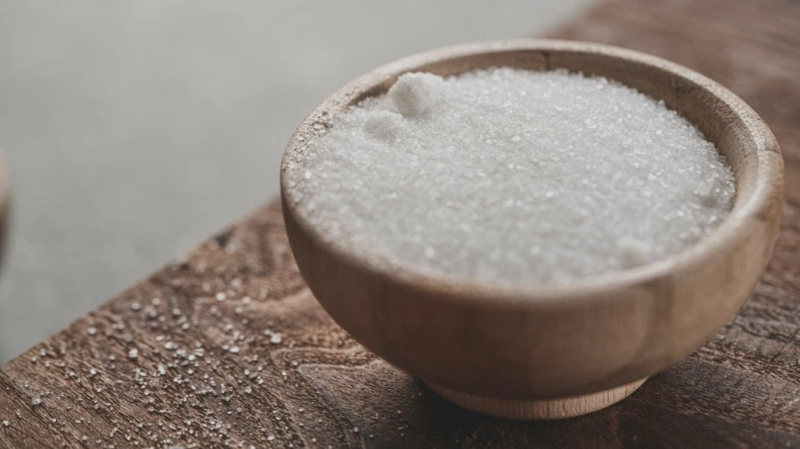
Aspartame breaks down into phenylalanine, aspartic acid, and methanol during digestion. Accumulation of phenylalanine is dangerous for people with phenylketonuria (PKU), a rare inherited disorder, who therefore must avoid aspartame completely. For the general population, the metabolic products are considered safe at dietary levels.
Aspartame is widely used to:
- Sweeten diet sodas, sugar-free beverages, and flavored waters
- Produce sugar-free candies, chewing gums, and desserts
- Formulate tabletop sweeteners and mixed-blend products with natural sweeteners and polyols
- Enhance the taste of healthcare supplements and diabetic-friendly nutrition products
Its ability to provide sweetness without adding calories supports consumer demand for reduced-sugar and low-calorie options, playing an important role in weight and metabolic health management.
Aspartame remains one of the most intensively studied artificial sweeteners, with current regulatory consensus supporting its safety when consumed within established limits. Newer scientific studies suggest potential health effects, including impacts on puberty timing, neurotoxicity, cardiovascular health, and cancer-related pathways. However, the overall evidence does not definitively prove harm, underscoring the need for further high-quality research. People with phenylketonuria must avoid aspartame due to their inability to metabolize phenylalanine. In the evolving landscape of food innovation, aspartame continues to be combined with natural sweeteners and functional ingredients to provide healthier sweetening solutions for food, beverage, and healthcare industries.
Aspartame is considered safe for the general population when consumed within the acceptable daily intake. People with phenylketonuria (PKU) must avoid it due to metabolic risks.
Aspartame is classified by the IARC as possibly carcinogenic based on limited evidence, but regulatory agencies like FDA and WHO do not find convincing evidence linking typical consumption to cancer.
Some studies suggest potential neurotoxic effects and cognitive decline at high consumption levels, but more research is needed to confirm any causal relationships.
Emerging research reports possible links with delayed puberty, cardiovascular diseases, ischemic stroke, type 2 diabetes, and gut microbiome disturbances; these require further study for confirmation.
Aspartame provides intense sweetness without calories, helping reduce sugar intake while maintaining taste, which is valuable for weight management and dietary health.
[1](https://www.foodwatch.org/en/new-studies-reinforce-health-concerns-over-aspartame-but-eu-action-still-missing)
[2](https://www.nature.com/articles/s41598-024-62461-w)
[3](https://www.who.int/news/item/14-07-2023-aspartame-hazard-and-risk-assessment-results-released)
[4](https://www.efsa.europa.eu/en/topics/topic/aspartame)
[5](https://www.fdli.org/2024/01/the-curious-case-of-aspartame-how-the-same-evidence-can-yield-seemingly-different-conclusions/)
[6](https://pmc.ncbi.nlm.nih.gov/articles/PMC12286081/)
[7](https://www.fda.gov/food/food-additives-petitions/aspartame-and-other-sweeteners-food)
[8](https://www.cnn.com/2025/09/03/health/artificial-sweetener-cognition-wellness)
[9](https://pubmed.ncbi.nlm.nih.gov/40608001/)
[10](https://sph.umich.edu/news/2023posts/aspartame-and-cancer-a-toxicologists-take.html)


