
Views: 222 Author: Sara Publish Time: 2026-01-10 Origin: Site


Content Menu
● Chemical Structure of Sucrose
● Sucrose vs. Artificial Sweeteners
● Sucrose in Food and Beverages
● Sucrose in Healthcare Applications
● Sucrose Production Processes
● Sucrose in Modern Sweetener Blends
● Regulatory Status of Sucrose
● Innovations Involving Sucrose
● Environmental Footprint of Sucrose
● Consumer Perceptions of Sucrose
● Future of Sucrose in Health Solutions
● FAQ
>> 1. What exactly is sucrose?
>> 2. How does sucrose differ from sucralose?
>> 3. Is sucrose safe for daily consumption?
>> 4. Can sucrose feature in diabetic products?
>> 5. Why prioritize sucrose blends?
Sucrose is not an artificial sweetener; it is a natural disaccharide sugar primarily derived from sugarcane and sugar beets. This key distinction underscores its integral role in food, beverages, and healthcare solutions, setting it apart from lab-synthesized alternatives like sucralose or aspartame. As a Chinese factory specializing in natural sweeteners, functional polyols, and dietary fibers, we harness sucrose's natural properties for innovative OEM/ODM services tailored to international manufacturers.[1]

Sucrose forms naturally in plants as an energy storage compound, most abundantly in sugarcane stalks and sugar beet roots. Through mechanical extraction—milling, juicing, purification, and crystallization—sucrose emerges in its pure form without chemical alteration, preserving its status as a natural product. This process contrasts sharply with artificial sweeteners, which undergo synthetic modifications in laboratories to achieve non-caloric profiles.
Globally, over 90% of sucrose comes from sugarcane in tropical regions, with beets dominating temperate zones. Our factory integrates high-purity sucrose into blended formulations, enhancing sweetness in tablets and mixes for the food and beverage sectors. Sucrose's natural abundance ensures consistent supply, making it a reliable base for functional polyols like maltitol and dietary fibers such as inulin in our health-focused products.[2]
At its core, sucrose is C12H22O11, a disaccharide linked by an α-1,2-glycosidic bond between α-D-glucose and β-D-fructose units. This structure renders sucrose non-reducing, stable in solution, and hydrolyzable only by invertase or acid into equal glucose and fructose parts for metabolism. Unlike artificial sweeteners engineered for permanence—such as sucralose's chlorine substitutions—sucrose breaks down naturally in the digestive tract, delivering 4 kcal/g of energy.
Sucrose's solubility peaks at 200g/100ml in water at room temperature, ideal for syrups and beverages, while its melting point around 186°C enables caramelization unique to natural sugars. In our OEM tablet production, sucrose acts as a binder and sweetener, synergizing with natural extracts for superior dissolution and taste masking in nutraceuticals.[3]
Artificial sweeteners dominate zero-calorie markets but fall short of sucrose's holistic functionality. Sucralose, for instance, starts as sucrose but gains three chlorine atoms, boosting sweetness 600-fold while eliminating calories—yet it passes undigested, potentially disrupting gut flora. Aspartame decomposes into phenylalanine and aspartic acid, saccharin offers a bitter aftertaste, and acesulfame-K relies on sulfonamide chemistry.
Sucrose provides bulk, texture, and fermentability absent in high-intensity artificials, supporting Maillard reactions for flavor in baking. Studies link excessive artificial sweetener use to glucose intolerance and cravings, whereas sucrose in moderation fuels steady energy release. Our factory's sucrose-polyol blends reduce calories by 50% naturally, outperforming artificial-heavy formulas for beverage and healthcare clients.[4][5][6]
| Aspect | Sucrose (Natural) | Artificial Sweeteners (e.g., Sucralose) |
|---|---|---|
| Origin | Plant extraction (sugarcane/beets) | Chemical synthesis |
| Sweetness Relative to Sucrose | 1x | 300-600x |
| Caloric Value | 4 kcal/g | Negligible |
| Metabolic Fate | Hydrolyzed to glucose/fructose | Excreted unchanged |
| Heat/Acid Stability | High, enables browning | High but no caramelization |
| Gut Impact | Supports microbiota in balance | Potential dysbiosis |
| Cost per Sweetness | Baseline | Higher due to potency |
Sucrose's story begins over 5,000 years ago in New Guinea with sugarcane chewing, evolving to crystallization in India by 500 BCE. Arab traders refined techniques, introducing solid sucrose to Europe via the Crusades. The 18th-century colonial boom—Haiti, Java—scaled production, with steam-powered centrifuges by 1840s enabling mass sucrose supply.
By 1900, sucrose fueled urban workforces, but 20th-century artificials like saccharin (WWII sugar shortages) challenged it. Today, sucrose rebounds in clean-label trends, integral to our factory's natural sweetener developments for global OEM partners. Annual output exceeds 200 million metric tons, cementing sucrose's dominance.[2]
In beverages, sucrose adjusts Brix levels for optimal refreshment, stabilizes emulsions, and depresses freezing points in frozen treats. Carbonated drinks leverage sucrose's viscosity to temper CO2 bite, while juices benefit from its clarity in concentrates. Confectionery relies on sucrose stages—inversion for fondants, supersaturation for rock candy.
Baking science amplifies sucrose: it creams with fats for aeration, inverts partially for hygroscopicity, and browns via Maillard with proteins. Our factory produces sucrose-fortified syrups and tablets for beverage giants, blending with fibers for low-sugar sodas that retain sucrose's mouthfeel. Dairy uses sucrose for yogurt sweetness and ice cream scoopability, preventing syneresis.[7]
- Sucrose in sodas: Balances tartness, enhances fizz retention.
- Sucrose in jams: Gels pectin at 65% concentration.
- Sucrose in breads: Ferments with yeast for volume.
- Sucrose in chocolates: Controls tempering viscosity.
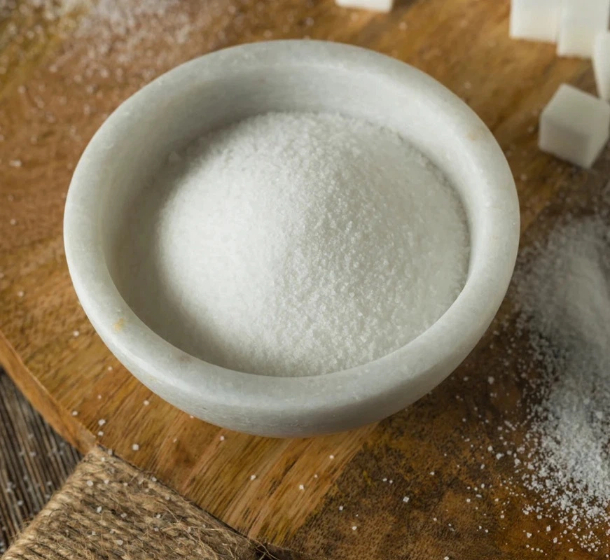
Pharma employs sucrose in cough syrups for osmolality, effervescent tablets for rapid disintegration, and IV solutions as cryoprotectant. WHO ORS includes sucrose to combat dehydration via glucose-sodium cotransport. Sucrose's non-cariogenic profile in moderation suits pediatric formulations.
Nutraceuticals pair sucrose with probiotics and fibers, as in our OEM lozenges promoting oral health. Unlike artificials potentially altering sweet taste receptors, sucrose aligns with innate preferences, aiding compliance in chronic care.[5]
Sucrose metabolizes swiftly: 50% glucose powers cells universally, 50% fructose processes in liver to ATP or triglycerides if excessive. WHO caps added sugars at 25g/day for adults, linking overconsumption to NAFLD and caries via biofilms. Yet, whole-food sucrose (fruits) with fibers tempers absorption, yielding low effective GI.
Brain imaging shows sucrose activates reward centers comparably to drugs, explaining appeal but manageable via blends. Our polyol-sucrose synergies cut GI to 40, ideal for glycemic control without artificial pitfalls like sucralose's hunger signals.[6][4]
Cane sucrose: Harvest, shred, extract juice (95% sucrose), clarify via sulfitation/phosphatation, boil to massecuite, centrifuge for A-sugar (95% pure), remelt B/C sugars. Beet skips shredding for diffusion. Yield: 10-12% cane weight as sucrose.
Quality metrics: color <50 ICUMSA, ash <0.04%, invert <0.1%. Our facility refines pharmaceutical sucrose to 99.95% via recrystallization, supporting tablet compression at 20kN hardness for export.[2]
Sugar reduction trends propel sucrose hybrids: 70% sucrose + 30% stevia cuts calories 30%, masking bitterness with sucrose bulk. Monk fruit-sucrose yields 1:1 replacements; erythritol-sucrose cools without laxation at parity.
Our R&D crafts beverage blends hitting 5% sugar targets, OEM tablets with 50% reduction via fibers. Sucrose anchors cost and scalability, thriving amid HFCS declines.[8][9]
India (35M tons), Brazil (30M), EU (25M) lead, with China at 10M domestic + imports. Low-cal segments grow 5% CAGR, sucrose blends capturing 20% share. Exports favor natural profiles, aligning with our US/EU supply chains.
Pricing: $350-450/ton raw, $600 refined. Sustainability certifications boost premiums 15%.[2]
GRAS by FDA since 1958, INS 420, JECFA ADI unlimited. Codex permits unlimited in most foods. Labeling as "sugar" mandates nutrition facts, unlike "sugar-free" artificial claims needing proof.
Harmonized standards facilitate our global OEM compliance.[1]
Biotech converts sucrose to allulose via epimerase, or tagatose via hydrolysis. Sucrose esters emulsify sans synthetics. Nano-sucrose targets delivery.
We innovate polyol-sucrose fibers for 0 GI bars, pioneering healthcare OEM.[9]
Cane recycles water (1500mm rain equiv.), bagasse generates 2x energy needs. Beet byproducts feed livestock. Lifecycle emissions: 80g CO2/kg vs. aspartame's 500g.
Initiatives like Raizen's zero-waste advance green sucrose.[2]
Surveys show 70% prefer sucrose-labeled products for "naturalness." Amid artificial bans (e.g., stevia approvals), sucrose reassures. Marketing emphasizes moderation.
Our branding highlights sucrose purity for trust-building.[8]
Precision fermentation yields sucrose analogs; gene-edited cane boosts yield 20%. Sucrose scaffolds personalized nutrition.
Our factory leads with ODM sucrose innovations for aging populations.[2]
Sucrose remains a cornerstone natural sweetener, far from artificial, powering taste, function, and innovation across industries. From sugarcane fields to our factory's blended masterpieces, sucrose delivers balanced sweetness responsibly. Opt for sucrose-centric solutions for authentic, healthful indulgence.
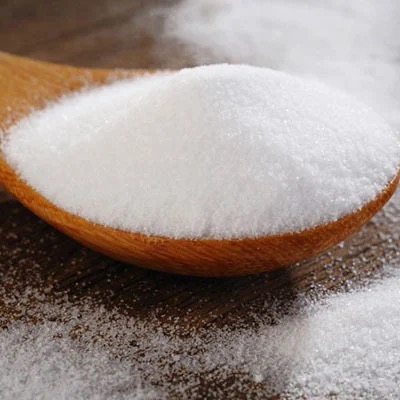
Sucrose is a natural disaccharide from sugarcane or beets, comprising glucose and fructose linked glycosidically, delivering benchmark sweetness at 4 kcal/g.[1]
Sucrose is entirely natural and digestible; sucralose is semi-synthetic, chlorinated sucrose that's 600x sweeter but indigestible, raising metabolic concerns.[3][4][1]
Yes, WHO endorses <10% calories from sucrose, providing essential energy without artificial risks when moderated.[5][6]
Blended with fibers or polyols, sucrose lowers GI effectively, suiting controlled diets via our OEM formulations.[2]
Sucrose offers unmatched bulk, flavor synergy, and natural appeal, surpassing artificials in comprehensive sweetener solutions.[8]
[1](https://en.wikipedia.org/wiki/Sucralose)
[2](https://pdf.dfcfw.com/pdf/H3_AP202412131641289648_1.pdf)
[3](https://www.nebraskamed.com/health/healthy-lifestyle/bariatrics-weight-loss/monk-fruit-sucralose-and-other-sugar-substitutes)
[4](https://liveowyn.com/blogs/owyn-articles/sucralose-artificial-sweeteners-recent-studies-reveal-health-risks)
[5](https://pmc.ncbi.nlm.nih.gov/articles/PMC3856475/)
[6](https://www.cnn.com/2025/03/29/health/artificial-sweetener-sucralose-hunger-signals-wellness)
[7](https://www.caldic.com/zh-hans-cn/markets/food-beverage/beverage/)
[8](https://www.foodtalks.cn/news/51833)
[9](https://www.cbndata.com/information/294182)


