


Content Menu
● Safety and Regulatory Approval
● Mechanisms of Action and Metabolism
● Environmental and Manufacturing Considerations
● Consumer Trends and Market Insights
● FAQ
>> 1. Is sucralose safe for everyone?
>> 2. Can sucralose be used for baking?
>> 3. Does sucralose affect blood sugar?
>> 4. How sweet is sucralose compared to sugar?
>> 5. Are there any side effects of sucralose?
Sucralose is a widely used artificial sweetener known for its intense sweetness, calorie-free nature, and remarkable stability in various food and beverage applications. It is about 600 times sweeter than regular sugar but contributes no calories because it is not metabolized by the body. Sucralose is a popular sugar substitute, especially favored for diabetic-friendly, low-calorie, and dental-safe products across food, beverage, and pharmaceutical industries, making it a key ingredient in health-conscious formulations.

Sucralose is a synthetic sweetener derived from sucrose (table sugar) by replacing three hydroxyl groups with chlorine atoms in a selective chlorination process. This alteration results in a molecule that is much sweeter than sugar but not broken down by digestive enzymes, thus not providing calories or affecting blood glucose levels. Its chemical name is 1,6-dichloro-1,6-dideoxy-β-D-fructofuranosyl-4-chloro-4-deoxy-α-D-galactopyranoside. These structural changes make sucralose unique among sweeteners, offering intense sweetness without the calorie load of sugar.[1][2]
Sucralose is extensively employed in many product categories due to its sweetness and versatility:
- Beverages: Soft drinks, flavored waters, diet sodas, and sports drinks
- Dairy products: Yogurt, flavored milk, ice cream
- Baked goods: Cookies, cakes, pastries, where its heat stability preserves sweetness during baking
- Candy and confections: Sugar-free chewing gum and chocolate
- Sauces and dressings: Used as a low-calorie sweetener alternative
- Tabletop sweeteners: Packets and granulated products for direct use, with Splenda® being the most recognized brand globally
Its wide application is supported by sucralose's solubility in water and alcohol, making it suitable for both fat- and water-based products.[2][3][1]
Several benefits make sucralose a preferred choice in health-focused formulations:
- Zero calories, making it ideal for weight management and diabetic diets
- Does not raise blood glucose or insulin levels, crucial for diabetic consumers
- Heat stable, retaining sweetness when heated, unlike some other artificial sweeteners
- Tooth-friendly, as it is not fermentable by oral bacteria and thus does not contribute to tooth decay
- Long shelf life and compatibility with various food matrices and pH conditions ensure product quality
- Enables sugar reduction in processed foods while maintaining palatability, supporting public health goals for lower sugar consumption.[5][9][11]
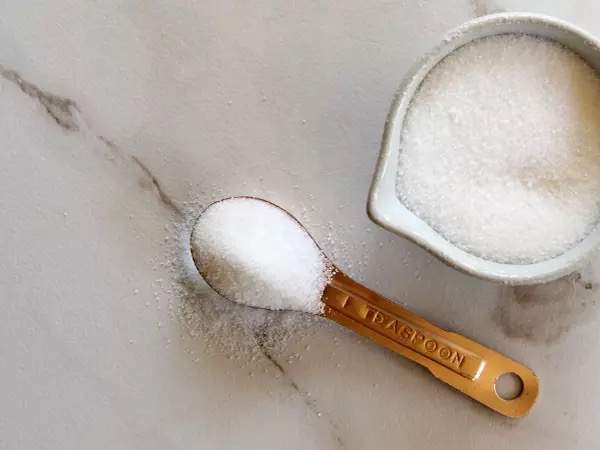
Sucralose production begins with regular sugar molecules. Through a multi-step chemical process, three specific hydroxyl groups on the sucrose molecule are selectively replaced with chlorine atoms. This substitution alters its molecular behavior so that sucralose is not metabolized in the gut but passes through the body unchanged, providing sweetness without energy contribution. The production process is controlled to ensure purity, safety, and consistency for use in food and pharmaceutical products.[7][1]
Extensive scientific research has evaluated the safety of sucralose over more than two decades. Regulatory agencies such as the U.S. Food and Drug Administration (FDA), European Food Safety Authority (EFSA), and World Health Organization (WHO) have approved sucralose for use based on its safety profile. The acceptable daily intake (ADI) is set at 15 mg per kg body weight per day, a level far above typical consumption ranges. Studies have found no evidence of carcinogenicity, genotoxicity, or adverse effects in humans when consumed within recommended limits. It is approved for all population groups, including children and pregnant women.[1][5][7]
Sucralose activates sweet taste receptors in the oral cavity and the gut, providing an intense sweet taste perception without the caloric effect. Unlike natural sugars, it is not broken down or absorbed, so it neither contributes energy nor influences blood sugar levels. Some research has explored subtle effects on gut microbiota and glucose metabolism, but definitive evidence supporting adverse health effects remains lacking. The majority of sucralose consumed is excreted unchanged, underpinning its non-nutritive character.[6][9]
Sucralose's synthetic origin involves chlorination, which raises questions about environmental persistence and biodegradability. Current assessments suggest sucralose is persistent in the environment but at low concentrations does not pose significant ecological risks. Manufacturers focus on optimizing production processes to minimize waste and ensure sustainable sourcing of raw materials. The energy-efficient production and minimal dosage needed offer advantages compared to traditional sugar in resource use.[7]
The market demand for sucralose continues to grow fueled by:
- Rising consumer health consciousness and sugar reduction strategies
- Increasing diabetic and weight management populations globally
- Expansion of ready-to-drink beverages, low-sugar snacks, and functional foods
- Regulatory encouragement to reduce added sugars while maintaining product taste
Manufacturers combining sucralose with other natural or artificial sweeteners achieve flavor profiles closer to sugar, addressing the demand for cleaner-label products with minimal caloric impact.[1]
Sucralose is a highly effective, zero-calorie artificial sweetener that has revolutionized the food, beverage, and pharmaceutical industries by providing intense sweetness without calories or blood sugar impact. Its molecular stability, safety profile, and broad regulatory acceptance make it a versatile ingredient in thousands of products worldwide. Due to its unique properties, sucralose supports global public health objectives aimed at reducing sugar consumption while satisfying sweet taste preferences.

Yes, sucralose is considered safe for all populations, including children and pregnant women, when consumed within recommended levels.[1]
Absolutely, sucralose is heat stable and can retain sweetness even after high-temperature baking.[11]
No, sucralose does not raise blood glucose or insulin levels, making it suitable for diabetics.[5]
Sucralose is approximately 600 times sweeter than regular sugar by weight.[2]
Current evidence indicates no significant adverse effects when consumed within the acceptable daily intake, though some studies are ongoing regarding gut metabolism.[9]
[1](https://ific.org/insights/everything-you-need-to-know-about-sucralose/)
[2](https://en.wikipedia.org/wiki/Sucralose)
[3](https://www.webmd.com/diet/what-to-know-about-sucralose)
[4](https://pmc.ncbi.nlm.nih.gov/articles/PMC3856475/)
[5](https://www.fda.gov/food/food-additives-petitions/aspartame-and-other-sweeteners-food)
[6](https://steelfitusa.com/blogs/supplements/your-complete-guide-to-sucralose)
[7](https://baynsolutions.com/en/sucralose-a-guide-to-artificial-sweeteners/1118156)
[8](https://www.healthline.com/nutrition/sucralose-good-or-bad)
[9](https://pmc.ncbi.nlm.nih.gov/articles/PMC10971371/)
[10](https://www.mayoclinic.org/healthy-lifestyle/nutrition-and-healthy-eating/in-depth/artificial-sweeteners/art-20046936)
[11](https://www.amerigoscientific.com/everything-you-need-to-know-about-sucralose-uses-benefits-and-safety.html)


