
Views: 222 Author: Sara Publish Time: 2025-12-30 Origin: Site


Content Menu
● Indonesia's Pectin Landscape
● Key Pectin Manufacturers and Suppliers
>> PT Azelis Indonesia Distribusi
>> PT Cisarua Mountain Dairy (Cimory)
● Competitive Advantages of Indonesian Pectin Manufacturers
● Food and Beverage Applications
● Role in Pharmaceutical and Healthcare Applications
● Global Reach and Export Strength
● Product Quality and Standards
● Technological Innovation and Research
● Market Challenges and Opportunities
● FAQ
>> 1. What makes Indonesian pectin manufacturers and suppliers competitive?
>> 2. Which industries commonly use pectin from Indonesia?
>> 3. How do Indonesian pectin suppliers ensure product quality?
>> 4. Can buyers request customization from pectin manufacturers?
>> 5. What does the future hold for Indonesian pectin exports?
Indonesia stands out as a key hub for pectin manufacturers and suppliers, offering high-quality pectin products for the food, beverage, and healthcare sectors. These producers play a vital role in global ingredient supply chains by providing sustainable, natural, and cost-effective solutions. The nation's growing reputation as a reliable sourcing point for pectin comes from its abundant agricultural resources and an expanding focus on clean-label and plant-based products.

The pectin industry in Indonesia has been expanding rapidly thanks to its strong agricultural foundation and the country's expertise in processing citrus and tropical fruits. Many pectin manufacturers and suppliers utilize local fruit peel byproducts—such as orange, lime, and guava peels—to create pectin that matches or exceeds the quality produced in Europe or Latin America. These suppliers typically specialize in high-methoxyl (HM) and low-methoxyl (LM) pectins, used across multiple industries for gelling, thickening, and stabilizing applications.
Government support for natural product manufacturing and export reform has further aided the growth of pectin producers. Many Indonesian companies adhere to strict international food safety and quality certifications such as ISO, HACCP, and Halal standards, positioning them as competitive suppliers in global trade.
PT Chemindo Ekatama is among Indonesia's most established pectin manufacturers and suppliers, offering a full range of pectin varieties for food, beverage, and pharmaceutical applications. Based in Jakarta, the company provides both standard and amidated pectin, widely used in jams, jellies, sauces, and gummies. Their consistent quality control and vertical integration ensure tight oversight of production, making them a well-known pectin partner across Southeast Asia. The company's business also extends to custom formulations, helping brands develop proprietary blends for specific product textures and functionalities.
Azelis Indonesia Distribusi is part of the international Azelis Group, bringing advanced distribution and formulation expertise to the local pectin market. It sources pectin from global partners while developing application support centers to test and optimize formulations for clients in Indonesia. Azelis provides reliable supply chain networks, ensuring a stable flow of materials for beverage and dairy manufacturers. Their focus on innovation and sustainability has positioned them as a bridge between global ingredient technology and local industry needs.
Cimory is a well-known Indonesian dairy producer that also operates as a major user and secondary supplier of pectin-based stabilizers. The company utilizes pectin in products like yogurts, smoothies, and drinkable dairy snacks to ensure appealing texture and shelf stability. Cimory's R&D division collaborates with ingredient suppliers to refine pectin's functionality in various temperature and pH ranges. Their innovation-centered approach has driven wider adoption of pectin in Indonesia's rapidly growing functional dairy market.
Another leading company in the local pectin supply chain is PT Tiga Srikandi Jaya, a full-service supplier providing food-grade pectin for confectionery and dessert applications. They work closely with bakeries, candy manufacturers, and fruit-processing plants to provide tailor-made solutions. Their logistics efficiency and focus on long-term partnerships make them one of the most dependable wholesale suppliers for pectin ingredients.
PT Intralab Ekatama operates from Bogor, producing both lab-grade and food-grade pectin products. The company specializes in research-driven development, quality testing, and OEM services. It has expanded its export operations to various regions in Asia and the Middle East, offering pectin solutions for pharmaceuticals, dietary fibers, and powdered drink mixes. Their technical team also assists customers in adjusting formulas to meet specific viscosity and gel strength demands.
Indonesia's pectin manufacturers have several competitive advantages when compared to their counterparts in other parts of the world. The primary factor is the country's access to low-cost raw materials, thanks to its tropical fruit production. The ability to source fruit peel waste locally significantly reduces material costs, which allows Indonesian pectin suppliers to offer competitive prices without compromising on quality.
Additionally, Indonesian producers have made substantial investments in process innovation—particularly in extraction and purification technologies. These advancements ensure that pectin maintains high purity levels and consistent functionality in food and beverage applications. Many Indonesian facilities also emphasize environmentally friendly extraction techniques, minimizing chemical usage and conserving water in the process.

Pectin is an indispensable ingredient in many food and beverage applications. In jams and fruit preserves, high-methoxyl pectin enables excellent gel formation under specific sugar and acid conditions. In contrast, low-methoxyl pectin is preferred in low-sugar or no-sugar formulations, gelling with calcium ions instead of sucrose.
Beverage companies increasingly rely on pectin to stabilize pulp beverages, dairy drinks, and plant-based alternatives. It prevents sedimentation and enhances the mouthfeel, providing a smooth and enjoyable texture. In confectionery and bakery sectors, pectin is used as a natural thickener and stabilizer in fruit fillings, gummies, and glazes. In addition, pectin is recognized for its dietary fiber content, leading many functional food manufacturers to incorporate it into fiber-enriched snacks, supplements, and meal replacement beverages.
Beyond food and drink, pectin manufacturers in Indonesia cater to the health and wellness industry. Pectin's natural biocompatibility and gelling ability make it suitable for use in controlled drug release systems and wound-healing formulations. Pharmaceutical companies utilize pectin as a stabilizer in liquid medications and as a coating for tablets to ensure delayed release in the human body. There is growing interest in exploring pectin as a prebiotic dietary fiber to improve gut health.
Over the past decade, Indonesian pectin exporters have significantly expanded their global footprint. Major export partners include Japan, South Korea, the United States, India, and several European countries. Despite competition from large multinational exporters in Brazil and Denmark, Indonesian pectin manufacturers have thrived due to their balance of cost, quality, and reliability. The government's trade initiatives supporting Halal-certified natural ingredients further enhance the country's export readiness.
Modern ports, especially in Jakarta and Surabaya, streamline logistics for pectin shipments, guaranteeing consistent delivery timelines and reduced lead times for global buyers. Many suppliers maintain partnerships with international distributors, ensuring that clients receive personalized supply chain and technical support.
Quality assurance is a defining trait of Indonesian pectin producers. Testing for gel strength, viscosity, pH stability, and degree of esterification is standard practice. Each production batch is carefully monitored through digital quality control systems. Producers who serve both domestic and international clients are required to meet globally recognized benchmarks like USP, FCC, and EU standards.
Furthermore, food safety and traceability have become top priorities for Indonesian companies. Several facilities have implemented blockchain-based tracking systems for customers to verify product origins. The combination of regulation, transparency, and innovation has made Indonesia an emerging powerhouse in natural pectin production.
Innovation remains at the heart of Indonesia's pectin industry. Companies are investing in R&D to develop specialized forms of pectin, such as amidated pectin (for lower sugar environments) and micro-pectin particles (for enhanced solubility). Some laboratories are experimenting with nano-pectin applications in pharmaceuticals and cosmetics, aiming to expand usage beyond traditional food sectors.
Several producers are also blending pectin with other natural ingredients—like functional polyols and dietary fibers—to create multifunctional formulations. These new products cater to the demand for low-calorie, high-fiber, and sugar-replacement applications, aligning perfectly with consumer health trends worldwide.
Sustainability has become a core focus for Indonesian pectin manufacturers. Many plants operate on renewable energy sources like biomass and solar panels. They recycle fruit waste, contributing to circular economy goals. For instance, by-products such as peel residue after pectin extraction are processed into animal feed or fertilizer, ensuring nearly zero waste output.
Water conservation and energy efficiency programs have also been introduced across leading companies, positioning Indonesia as one of the most environmentally responsible pectin-producing countries in Asia. This sustainability-driven approach enhances the country's reputation among eco-conscious buyers and partners.
Despite its rapid growth, Indonesia's pectin industry faces some challenges. The primary concern is the fluctuation of raw material availability, which can be affected by weather changes and agricultural cycles. Another challenge lies in global competition—especially from established producers in Europe, where pectin production has long traditions and advanced machinery.
However, these challenges also create opportunities. Indonesian producers are increasingly entering joint ventures with international manufacturers to improve technology sharing and R&D. Moreover, the government's ongoing efforts to improve food ingredient export regulations and digitalize trade documentation are expected to boost the industry's transparency and efficiency.
The future for pectin manufacturers and suppliers in Indonesia looks bright. With global demand for natural stabilizers, clean-label products, and plant-based alternatives rising dramatically, Indonesia is expected to achieve double-digit growth rates in pectin exports over the next decade. Technological advancements and sustainable processing will enable local firms to move further up the value chain, creating customized solutions for high-value global markets.
Manufacturers are also likely to expand their presence in functional food, nutraceutical, and cosmetic industries, exploring new applications of pectin as a bioactive compound. Overall, Indonesia's strong raw material base, technical growth, and environmental responsibility offer a promising outlook for continued expansion in the global pectin industry.
Indonesia's pectin manufacturers and suppliers represent a dynamic, innovative, and sustainable sector in the global natural ingredient market. Companies such as PT Chemindo Ekatama, PT Intralab Ekatama, and PT Azelis Indonesia demonstrate leadership through quality standards, competitive pricing, and commitment to environmental responsibility. With continuous advancements in technology, product diversification, and export expansion, Indonesian pectin producers are positioned to play a major role in shaping the future of clean-label and functional ingredients worldwide.
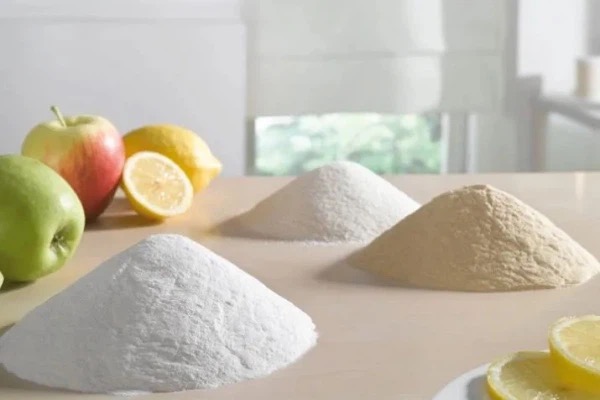
Indonesian pectin manufacturers and suppliers benefit from low raw material costs, modern processing facilities, and compliance with global quality standards. Their strong emphasis on sustainability and Halal certification also enhances their reputation in international markets.
The main sectors include food, beverages, confectionery, dairy, pharmaceuticals, and health supplements. Pectin is essential for gelling, thickening, and stabilizing a wide range of consumer products.
Manufacturers follow ISO, HACCP, GMP, and other international certifications. Rigorous quality checks, including gel strength and microbiological testing, ensure each batch meets precise specifications.
Yes. Many Indonesian pectin suppliers offer OEM and ODM services, enabling clients to customize viscosity, texture, and composition for specific applications such as functional beverages, gummies, or fiber-enhanced foods.
The export potential is strong, with increasing global demand for plant-based ingredients. Continued investment in innovation and sustainability ensures Indonesian manufacturers will stay competitive in international pectin markets.


