
Views: 222 Author: Sara Publish Time: 2025-10-25 Origin: Site


Content Menu
● Introduction to Isomaltulose
● Key Players and Capabilities
● Production and Purification Pathways
● Sustaining Quality and Safety
● Sustainability and Green Chemistry
● Applications Across Industries
● Case for OEM/ODM Collaborations
● Integrating Multimedia to Enhance Engagement
● Global Perspectives and Competitive Landscape
● Regulatory and Compliance Considerations
● Practical Guidance for Partners
● FAQ
>> 1. What are the main advantages of Isomaltulose in the Russian market?
>> 2. Do Russian manufacturers meet international standards?
>> 3. What OEM/ODM services do these suppliers offer?
>> 4. How to assess the sustainability of Russian manufacturers?
>> 5. Which industries can benefit the most from Isomaltulose in Russia?
Isomaltulose, a natural glucose-fructose disaccharide found in trace amounts in honey and sugarcane, has gained global attention as a health-oriented sugar substitute. Its unique profile—low glycemic response, gentle sweetness, and tooth-friendliness—makes it particularly attractive for the food and beverage, healthcare, and nutraceutical sectors. Russia, with its expanding pharmaceutical industries, biotech capabilities, and growing focus on functional ingredients, has emerged as a strategic hub for isomaltulose production and supply. This article provides an in-depth look at the leading Isomaltulose Manufacturers and Suppliers in Russia, their production technologies, quality management systems, sustainability efforts, and the evolving market dynamics that position them as reliable partners for foreign brands seeking OEM/ODM capabilities and blended sweetener solutions.

Isomaltulose is a rare sugar in nature but can be produced industrially via microbial and enzymatic routes. The molecule is a disaccharide composed of glucose and fructose linked by an α-1,6 glycosidic bond, in contrast to the α-1,2 bond in sucrose. This structural difference yields slower digestion and a lower peak blood glucose response, which translates into sustained energy release without the rapid spikes associated with conventional sugars. Clinically and nutritionally, this profile supports applications in diabetic-friendly products, sports nutrition, weight management formulations, oral care products, and clean-label beverages. The production pathway is typically based on the isomerization of sucrose using specialized enzymes (sucrose isomerase) or whole-cell biocatalysis, with variants including immobilized enzymes or immobilized whole cells to enable continuous processes and easier downstream processing. These production routes have been refined to achieve high-purity isomaltulose with stable supply, meeting stringent regulatory and quality standards for global markets. For manufacturers, key value propositions include improved shelf stability, favorable sensory attributes, reduced cariogenic risk, and compatibility with low-calorie and high-fiber formulations. The Russian market is increasingly prioritizing these benefits as domestic manufacturers upgrade certification programs and invest in scalable, sustainable production lines. The global interest in isomaltulose is reflected in market analyses showing steady growth driven by demand in clean-label formulations and health-focused product categories.[1][4]
Russia's isomaltulose landscape is shaped by a confluence of factors: strong fermentation and enzyme-technology capabilities, a growing network of distributors and contract manufacturers, and a regulatory environment that favors high-quality, safety-focused ingredients. International brands entering the Russian market seek local production partners to optimize supply chains, reduce lead times, and tailor formulations for regional taste preferences. The ability to offer OEM/ODM services, formulate blended sweeteners, and provide finished dosage forms or functional food ingredients gives Russian suppliers a competitive edge. As consumer demand for healthier sugar alternatives grows, isomaltulose manufacturers and suppliers in Russia are strategically positioned to support global brands with localized production, robust quality systems, and responsive customer service. Market intelligence also points to expanding demand in neighboring regions and Europe, where Russian isomaltulose products can be integrated into value-added dietary supplements, beverages, and confectionery applications under favorable regulatory alignments.[10][11]
Russia hosts several notable players in the isomaltulose space, with capabilities spanning raw material sourcing, processing, purification, quality assurance, and logistics. While exact company names and public disclosures vary, typical strengths include:
- Advanced biotechnological platforms that enable efficient sucrose isomerization, either through immobilized enzymes or immobilized whole-cell systems, designed for high throughput and reuse of biocatalysts. These platforms support large-scale production while maintaining product stability and purity.
- Comprehensive quality management programs aligned with international standards such as GMP (Good Manufacturing Practice), ISO certifications, and traceability frameworks that ensure batch-to-batch consistency, impurity control, and compliance with regulatory requirements in export markets. These systems also facilitate audits and supplier qualification processes for multinational customers.
- Flexible manufacturing layouts capable of catering to diversified customer needs, including private-label formulations, customized blends with other functional carbohydrates (polyols, dietary fibers), and development support for final dosage forms like tablet or capsule blends when needed by OEM/ODM clients.
- Strong R&D pipelines focused on process optimization, enzyme engineering, and green chemistry practices to reduce energy consumption, solvent use, and waste generation. This aligns with the global trend toward sustainable production and clean-label ingredients.
Extensions of these capabilities commonly include partnerships with universities and research institutes to stay at the forefront of isomaltulose science, access to patent-protected production methods, and active participation in industry consortia that promote standardization and quality assurance across the supply chain. This collaborative ecosystem enhances the credibility of Russian suppliers in the eyes of international customers seeking reliable sourcing for health-focused sweeteners.[4][6]
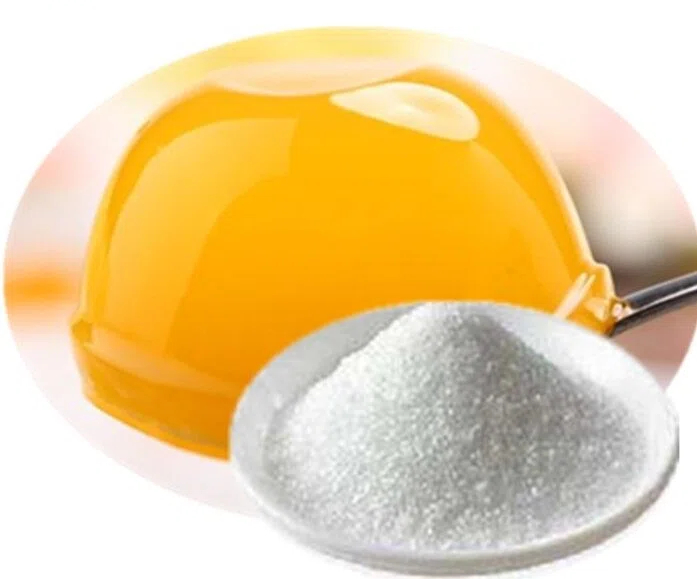
Isomaltulose can be produced via two dominant strategies: microbial conversion and enzymatic conversion. Both paths rely on sucrose isomerase to catalyze the rearrangement of the glucose-fructose bond. In microbial conversion, whole cells or immobilized cells expressing the isomerase enzyme convert sucrose into isomaltulose under carefully controlled conditions. In enzymatic conversion, purified enzymes catalyze the isomerization in solution or within immobilized reactor systems. Immobilization strategies, including calcium alginate matrices and other polymeric supports, improve enzyme or cell stability and enable continuous processing.
Post-conversion steps typically involve purification to remove residual sucrose, glucose, and fructose, followed by crystallization or drying to obtain the solid isomaltulose product. Crystallization parameters—solvent choice, temperature profiles, and seeding strategies—are optimized to yield high-purity crystals with desirable particle size distribution for downstream blending and formulation. Quality control measures encompass HPLC-based impurity profiling, optical rotation checks, moisture content determination, and residual solvent analysis to meet food and pharmaceutical grade specifications. The regulatory environment often requires registration of excipients and sweeteners, along with compliance documentation such as Certificates of Analysis (COAs) and supplier declarations. Russian manufacturers emphasize process robustness, scalability, and reproducibility to support long-term supply agreements with international customers.[2][7][1]
Quality assurance in isomaltulose production hinges on multi-layered controls:
- Raw material qualification for sucrose sources, including purity, impurity profiles, and consistency across lots.
- In-process controls during isomerization to monitor conversion rates, by-product formation (e.g., trehalulose in some pathways), and enzyme or cell stability.
- Final product testing for purity, moisture, color, odor, and microbial safety, with routine batch release procedures and independent third-party verification when required.
- Packaging and storage guidelines to prevent moisture uptake and caking, preserving shelf life and performance in formulated products.
- Documentation and traceability enabling recall readiness and compliance with export partner requirements.
These elements support reliable supply to OEM/ODM clients, whose formulations often rely on precise sweetness profiles and consistent performance under varying storage and usage conditions. In Russia, the emphasis on rigorous quality systems reflects the broader push toward international-standard manufacturing and the growing importance of export-ready products in global health-conscious markets.[11][4]
Sustainability has become a central pillar in modern isomaltulose production. Russian manufacturers increasingly deploy green extraction and biocatalytic methods to minimize solvent usage, energy consumption, and waste generation. Waste streams from crystallization and purification can often be repurposed or recycled, improving overall process efficiency. Additionally, companies invest in energy-efficient equipment, heat integration, and intelligent monitoring systems to optimize fermentation and reaction parameters in real time. These efforts resonate with global buyers who prioritize environmental responsibility as part of corporate procurement criteria. Certifications and independent audits further reinforce trust in sustainable practices across the supply chain.[8][12]
Isomaltulose offers versatility across multiple product categories:
- Food and beverage: Low-glycemic beverages, baked goods, confectionery, dairy desserts, and ready-to-eat meals benefit from stable sweetness and improved texture dispersion.
- Nutraceuticals and dietary supplements: Slow-release energy supports endurance formulations and meal-replacement products.
- Oral care products: The non-cariogenic property makes it suitable for toothpaste and mouthwash formulations where sweetness and compatibility matter.
- Sports and functional nutrition: Isomaltulose serves as a steady energy source in gels, powders, and bar products, aiding performance without rapid insulin spikes.
- Pharmaceutical excipients: In certain dosage forms, isomaltulose can contribute to palatability and controlled release characteristics.
Russian suppliers position themselves as capable partners to develop tailored blends, optimize sweetness intensity, and deliver customized particle sizes and flow properties for specific end-products. This capability is especially valuable for multinational customers seeking consistent performance across markets with varying regulatory and sensory expectations.[4][11]
OEM/ODM collaborations enable international brands to access localized production capacity, shorten lead times, and customize formulations to fit regional taste profiles while maintaining global quality standards. Russian manufacturers frequently offer:
- Formulation development support to design isomaltulose-based sweeteners suited to target product categories.
- Blending services with other sweeteners, fibers, or polyols to achieve desired sweetness, texture, and mouthfeel.
- Tablet or powder form production for dietary supplements, enabling seamless integration into finished dosage forms.
- Regulatory support, including documentation, labeling guidance, and certifications aligned with destination markets.
By leveraging these capabilities, global partners can bring innovative, health-forward products to market more efficiently, with the added benefits of supply chain resilience and cost competitiveness offered by regional production hubs.[13][4]
To strengthen understanding and engagement, multimedia elements such as illustrative diagrams of the isomaltulose production process, plant tours, expert interviews, and application demonstrations can be embedded into marketing materials and technical dossiers. Visuals that explain enzyme immobilization, biocatalysis workflows, and crystallization dynamics help stakeholders grasp complex concepts quickly. Video content featuring facility showcases, quality control laboratories, and supply-chain logistics can further enhance credibility and investor confidence. When incorporating multimedia, ensure all assets are accessible, properly captioned, and aligned with branding guidelines to maximize impact across channels.[14][4]
Isomaltulose as a product has a mature global presence, with leading producers in various regions, including Europe, Asia, and the Americas. Russian suppliers compete by offering robust quality systems, competitive pricing for blended formulations, and flexible manufacturing capabilities. The competitive landscape emphasizes collaboration with international distributors and customers, adherence to international standards, and continuous process improvements to maintain a reliable, scalable supply of isomaltulose. Market analyses indicate steady demand growth, driven by health-conscious consumer trends and ongoing product innovations in the clean-label space. Russia's strategic location and growing technical competencies position its isomaltulose manufacturers and suppliers as valuable players within the broader global supply network.[8][10]
Regulatory compliance for isomaltulose products varies by region but generally emphasizes food-grade or pharmaceutical-grade specifications, purity criteria, labeling standards, and safety documentation. Russian manufacturers maintain robust compliance programs to facilitate cross-border distribution, including:
- Documentation suites such as COAs, Certificates of Analysis, and material safety data when applicable.
- Verification of supplier qualifications for raw materials and finished goods.
- Traceability systems enabling lot-level tracking from raw materials to finished products.
- Labeling and packaging aligned with destination market regulations, including allergen declarations and nutrition information.
Staying aligned with international regulatory expectations is central to the success of OEM/ODM partnerships, ensuring that products can rapidly enter target markets without delays or compliance risks.[1][2][11]
For foreign companies seeking Russian isomaltulose suppliers, several practical considerations can streamline collaboration:
- Due diligence: Evaluate certifications, production capacity, quality control protocols, and past client references.
- Technical compatibility: Confirm formulation capabilities, particle size distribution, moisture tolerance, and solubility characteristics in finished products.
- Supply chain resilience: Assess lead times, inventory strategies, and contingency plans for potential disruptions.
- Sustainability commitments: Review energy usage, waste management, and green chemistry initiatives.
- Regulatory readiness: Ensure documentation and certifications align with intended markets, and plan for any local registration requirements.
By conducting comprehensive vendor assessments and establishing clear performance metrics, international partners can maximize the value of Russian isomaltulose suppliers for their product portfolios.[11][4]
Russia's isomaltulose manufacturing ecosystem combines advanced biotechnological capabilities, rigorous quality systems, and a growing emphasis on sustainable production. Leading players are expanding their OEM/ODM capacities, enabling foreign brands to customize formulations and access efficient, regionally based supply chains. As demand for natural, health-promoting sweeteners continues to rise, Isomaltulose Manufacturers and Suppliers in Russia are well-positioned to contribute to global product innovation, improve supply reliability, and support the development of healthier foods, beverages, and health-care related products. The ongoing convergence of biotechnological advances, regulatory alignment, and sustainability initiatives will further strengthen Russia's role in the global isomaltulose landscape, benefiting manufacturers, suppliers, and end consumers alike.
Its low glycemic index, dental friendliness and natural origin characteristics, combined with local high-quality production and compliance system, make it an attractive sweetener choice in both the Russian market and the global market.[12][4]
Yes, major manufacturers usually have certifications such as GMP, CEP and DMF to ensure product safety, quality and export compliance.[12]
We offer customized formula development, mixed sweetener solutions, tablet/powder form production, etc., to help international brands achieve localized production and rapid launch.[12]
Pay attention to green extraction, waste minimization, energy efficiency and environmental management systems, and verify third-party certifications and annual environmental reports.[8][12]
The fields of food and beverages, health supplements, sports nutrition and oral care particularly benefit from its stable sweetness, low sugar load and taste characteristics.[4][11]
[1](https://pmc.ncbi.nlm.nih.gov/articles/PMC11048954/)
[2](https://data.epo.org/publication-server/rest/v1.0/publication-dates/19901017/patents/EP0392556NWA1/document.pdf)
[3](https://patents.google.com/patent/US4359531A/en)
[4](https://www.sorbit.ru/en/production/other-food-ingredients/isomaltulose)
[5](https://vestnikmax.ifmo.ru/en/article/17263/Isomaltulose_in_the_technology_of_ice_cream_form_fermented_milk.htm)
[6](https://patents.google.com/patent/EP0028900A1/en)
[7](https://www.sciencedirect.com/science/article/pii/S2468823117306442)
[8](https://www.globalinsightservices.com/reports/isomaltulose-market/)
[9](https://cdnsciencepub.com/doi/10.1139/cjm-2014-0493)
[10](https://www.transparencymarketresearch.com/isomaltulose-market.html)
[11](https://www.databridgemarketresearch.com/reports/global-isomaltulose-palatinose-products-market)
[12](https://www.newnaturebio.com/top-inositol-manufacturers-and-suppliers-in-russia.html)
[13](https://www.beneo.com/sales-partners)
[14](https://www.hygiena.com/zh-hans)


