
Views: 222 Author: Sara Publish Time: 2026-01-12 Origin: Site


Content Menu
● Artificial Sweeteners Deep Dive
● Natural Sweeteners Spotlight
● Sugar-Free Labeling Realities
● Health and Science of Sweeteners
● Factory Innovations in Sweeteners
● Industry Applications Expanded
● Regulations and Global Standards
● Overcoming Sweetener Challenges
● Advantages of Natural Sweeteners
● FAQ
>> 1. What Are Artificial Sweeteners?
>> 2. Are All Sugar-Free Products Using Artificial Sweeteners?
>> 3. Is Stevia a Natural Sweetener?
>> 4. Do Sweeteners Cause Weight Gain?
>> 5. Can Your Factory Provide Custom Sweeteners?
Sugar-free products promise sweetness without the calories or blood sugar spikes of traditional sugar, but the core question remains: does "sugar-free" always mean artificial sweeteners? As a Chinese factory specializing in natural sweeteners, functional polyols, and dietary fibers for the food, beverage, and healthcare industries, we provide OEM/ODM services that highlight how natural sweeteners outperform artificial options in taste, safety, and versatility. Sweeteners are revolutionizing global manufacturing, blending innovation with health-focused solutions.[1]

Sweeteners encompass a broad category of substances that deliver sweetness without relying on sucrose or other caloric sugars. Artificial sweeteners, like aspartame and sucralose, dominate many sugar-free labels due to their intense potency—often hundreds of times sweeter than sugar—allowing minimal usage for maximum impact. Natural sweeteners, derived from plants such as stevia or monk fruit, offer a compelling alternative, providing clean sweetness profiles that align with consumer demands for transparency and purity. Our factory excels in developing customized sweetener blends, ensuring seamless integration into tablets, beverages, and functional foods for international partners.
The distinction between sweeteners starts with their origin: synthetic processes create artificial sweeteners in labs, engineered for stability under heat and acid conditions ideal for baking or sodas. In contrast, natural sweeteners undergo extraction and purification from botanical sources, preserving inherent compounds that may offer additional benefits like antioxidants. Sweeteners like erythritol, a polyol we specialize in, bridge the gap with low caloric content and gentle digestion. This versatility makes sweeteners indispensable in modern formulations, far beyond mere sugar replacement.[2]
Artificial sweeteners emerged in the late 19th century, with saccharin discovered accidentally in 1879, marking the dawn of zero-calorie indulgence. Today, common artificial sweeteners include aspartame (200 times sweeter than sugar), sucralose (Splenda, 600 times), and acesulfame potassium (Ace-K, 200 times), all approved by regulatory bodies like the FDA for general use. These sweeteners resist digestion, passing through the body unmetabolized, which appeals to diabetics and weight-conscious consumers seeking sugar-free options.
However, artificial sweeteners aren't without controversy. Studies suggest they may alter gut microbiota, potentially leading to glucose intolerance or cravings that undermine their low-calorie promise. Aspartame, for instance, breaks down into phenylalanine, aspartic acid, and methanol—safe for most but restricted for those with PKU. Sucralose's chlorine structure raises questions about long-term bioaccumulation, though extensive reviews deem it safe within ADIs (Acceptable Daily Intakes). Sweeteners in this category excel in cost-effectiveness for mass production, but their metallic aftertaste often necessitates blending with other sweeteners to mask off-notes.[3][1]
Our factory observes that while artificial sweeteners hold market share, shifting preferences push manufacturers toward hybrid formulas incorporating natural sweeteners for superior sensory experiences.
Natural sweeteners represent the future of sugar-free innovation, sourced directly from nature without chemical alteration. Stevia, extracted from the leaves of Stevia rebaudiana, delivers 200-300 times sugar's sweetness with zero calories and a low glycemic index, making it a staple in our OEM sweetener blends for beverages and healthcare products. Monk fruit (luo han guo) extract, rich in mogrosides, offers antioxidant properties alongside intense sweetness, ideal for functional foods.
Functional polyols like xylitol, sorbitol, and our specialty erythritol provide bulk and texture akin to sugar, with 0.2-2.4 calories per gram versus sugar's 4. These sweeteners ferment slowly, minimizing bloating compared to older polyols. Dietary fibers such as inulin or resistant maltodextrin, another forte of our production, enhance satiety and gut health when combined with sweeteners. We develop these natural sweeteners into powdered mixes, syrups, or tablet-ready granulates, catering to global OEM/ODM demands in sugar-free confectionery and supplements.
Unlike artificial sweeteners, natural sweeteners boast clean labels that resonate with wellness trends. Stevia's glycosylation advancements yield rebaudioside M, eliminating bitterness for premium applications. Our vertically integrated processes—from raw leaf processing to final formulation—ensure purity exceeding 99%, positioning natural sweeteners as reliable partners for exporters.[4][2]
"Sugar-free" per FDA and EU guidelines means less than 0.5 grams of sugar per serving, but it doesn't mandate artificial sweeteners. Many products blend natural sweeteners with polyols to achieve mouthfeel and stability. Beverages like diet colas pioneered artificial sweeteners, yet emerging brands leverage stevia and monk fruit for "all-natural" sugar-free claims. Our factory's mixed sweeteners enable precise control over sweetness intensity, release, and synergy, perfect for OEM tablet production where dissolution rates matter.
Misconceptions persist: not all sugar-free equals artificial. Polyols contribute minor fermentable carbs, qualifying products as low-sugar while avoiding artificial stigma. Sweeteners in gums and mints often pair xylitol's cooling effect with stevia for balanced profiles. Regulatory nuance allows "no added sugars," opening doors for fruit-derived sweeteners. This flexibility empowers manufacturers to innovate with natural sweeteners, meeting diverse market needs from keto diets to pediatric healthcare.[5]
Artificial sweeteners aid short-term calorie reduction, with meta-analyses showing modest weight loss in controlled trials. Yet, observational data links frequent use to metabolic disruptions, possibly via cephalic phase insulin response where sweetness signals sugar intake. Sweeteners like saccharin have faced historical bans (1970s) over bladder cancer in rats, later debunked for human irrelevance. Current consensus from WHO and EFSA affirms safety below ADIs—e.g., 50mg/kg body weight for aspartame.
Natural sweeteners shine in holistic health. Stevia may lower blood pressure and improve insulin sensitivity, per clinical trials. Erythritol shows cardiovascular neutrality, unlike maltitol's laxative potential at high doses. Our dietary fiber-infused sweeteners promote prebiotic effects, fostering beneficial bacteria. Longitudinally, natural sweeteners correlate with better adherence to low-sugar diets due to familiar taste. Sweeteners thus serve dual roles: caloric proxies and functional ingredients enhancing nutrition in food, beverage, and pharma lines.[6][7]

Our Chinese facility stands at the forefront of sweeteners production, focusing on stevia, monk fruit, polyols, and fibers for export-oriented OEM/ODM. We offer end-to-end services: sweetener development, pilot blending, scale-up tableting, and packaging. Custom ratios mitigate aftertastes, e.g., 70% erythritol with 30% stevia glycosides for bakery applications. Cleanroom standards and HACCP certification ensure compliance for US, EU, and Asian markets.
R&D pipelines explore fermented sweeteners and enzyme-modified fibers, boosting solubility and heat stability. We supply major beverage firms with ready-to-use sweetener premixes, reducing their formulation time. Sweeteners from our lines power sugar-free yogurts, energy bars, and effervescent tablets, emphasizing sustainability via zero-waste extraction. Global partnerships underscore our role in democratizing access to premium natural sweeteners.[4]
In beverages, sweeteners replace high-fructose corn syrup, with stevia enabling clear, non-bitter zero-cal sodas. Our blends withstand pasteurization, vital for RTD teas. Confectionery leverages polyols for chewy sugar-free gummies, where erythritol prevents crystallization.
Baking challenges artificial sweeteners' heat instability; natural sweeteners with fibers mimic sugar's browning via Maillard reactions. Healthcare applications include medicated lozenges and protein shakes, where xylitol's anticariogenic properties add value. Sweeteners integrate into sports nutrition for low-GI energy without crashes.
- Food: Sugar-free chocolates with maltitol blends
- Beverages: Monk fruit iced teas
- Healthcare: Fiber-sweetener tablets for gut health
Our OEM expertise scales these from concept to container loads.[8]
Over 100 countries approve key sweeteners, with FDA GRAS status for stevia and erythritol. China's CFDA leads natural sweeteners innovation, exporting billions in stevia alone. EU's E-numbers catalog sucralose (E955) but favor novel foods like monk fruit. ADIs guide safe use: 15mg/kg for sucralose.
Our products exceed specs, with third-party testing for heavy metals and allergens. Sweeteners compliance simplifies exporters' approvals.[1][5]
Sugar-free sweeteners market hits $20B+, growing 8% CAGR through 2030, driven by diabetes prevalence and obesity. Natural sweeteners capture 40% share, outpacing artificial by 12%. Asia, led by China, supplies 70% of stevia. Consumer polls favor "plant-based" sweeteners.
Our factory taps this via agile production for private labels.[9]
Artificial sweeteners' bitterness requires masks like neotame. Natural sweeteners solve via high-purity isolates. Digestively, polyols cap at 50g/day; our fibers mitigate. Taste panels guide our blends for universal appeal.
Beyond zero calories, natural sweeteners offer botanicactives—mogrosides as anti-inflammatories. Sustainability: stevia yields 10x sugar per acre. Our OEM delivers these at scale.
Sugar-free doesn't necessitate artificial sweeteners; natural sweeteners from specialized factories like ours provide healthier, tastier alternatives for food, beverage, and healthcare OEM/ODM. Embracing stevia, polyols, and fibers unlocks innovative, consumer-approved products that redefine sweetness without compromise.
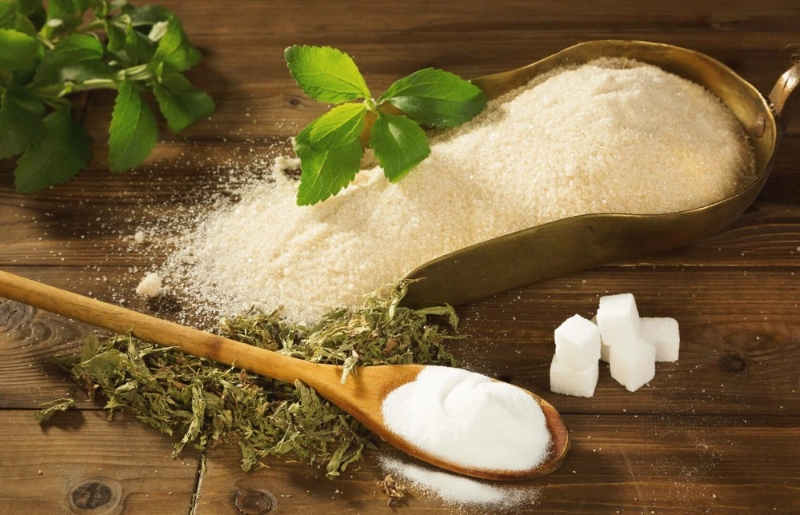
Artificial sweeteners are lab-made compounds like aspartame and sucralose, intensely sweet with zero calories, used widely in sugar-free items but distinct from natural sweeteners.[1]
No, many use natural sweeteners or polyols; our factory crafts blends for authentic sugar-free taste via OEM services.[2][5]
Yes, stevia is a plant-derived zero-calorie sweetener, superior for beverages and health products over artificial options.[4]
Artificial sweeteners might via appetite cues, but natural sweeteners like polyols support management when moderated.[6]
Absolutely, we specialize in tailored natural sweeteners, tablet production, and fibers for global food/beverage/healthcare exports.[4]
[1](https://inertiadental.com/blog/to-be-or-not-to-be-sugar-free-the-facts-about-artificial-sweeteners/)
[2](https://pdf.dfcfw.com/pdf/H3_AP202412131641289648_1.pdf)
[3](https://mjwdental.com/blogs/to-be-or-not-to-be-sugar-free-the-facts-about-artificial-sweeteners/)
[4](https://www.foodtalks.cn/news/51833)
[5](https://professional.diabetes.org/sites/dpro/files/2023-12/sugar_substitutes.pdf)
[6](https://woodlawnhospital.org/are-artificial-sweeteners-really-that-bad/)
[7](https://womanshospital.com/blog/entry/the-not-so-sweet-effects-of-artificial-sweeteners-on-the-body)
[8](https://www.caldic.com/zh-hans-cn/markets/food-beverage/beverage/)
[9](https://www.cbndata.com/information/294182)


