


Content Menu
● Types of Sugar-Free Sweeteners
● Natural Sweeteners in High Demand
● Artificial Sweeteners: Power and Precision
● Health Benefits of Sugar-Free Sweeteners
● Applications Across Industries
● Custom Blends and OEM Expertise
● Production and Quality Standards
● Market Dynamics and Innovations
● Regulatory and Safety Framework
● Consumer Insights and Challenges
>> 1. What are common sugar-free sweeteners?
>> 2. Are sugar-free sweeteners safe for diabetics?
>> 3. Can sugar-free sweeteners be used in baking?
>> 4. What is the difference between natural and artificial sweeteners?
>> 5. How do sugar-free sweeteners benefit beverages?
Sugar-free sweeteners deliver the beloved taste of sweetness without the calories, carbohydrates, or blood sugar spikes associated with traditional sugar. These versatile sweeteners, encompassing natural extracts, sugar alcohols, and high-intensity artificial options, have become indispensable in the food, beverage, and healthcare industries. Manufacturers worldwide rely on sugar-free sweeteners to create innovative, health-focused products that meet consumer demands for reduced-sugar lifestyles.[1][2]

Sugar-free sweeteners are broadly classified into artificial, natural, and sugar alcohols, each bringing distinct properties to formulations. Artificial sweeteners such as aspartame, sucralose, saccharin, acesulfame potassium (Ace-K), neotame, and advantame provide extraordinary sweetness levels—often hundreds of times greater than sucrose—while contributing zero calories. These sweeteners excel in applications requiring heat stability or long shelf life, like sugar-free beverages and baked goods.[2][1]
Natural sugar-free sweeteners derive from plant sources, appealing to consumers prioritizing clean-label ingredients. Stevia, sourced from the leaves of the Stevia rebaudiana plant, offers 200-400 times the sweetness of sugar with a clean, herbal profile ideal for teas and yogurts. Monk fruit (Luo Han Guo) extract, rich in mogrosides, delivers 100-250 times sugar's sweetness plus antioxidants, making it a premium choice for functional foods. Other natural sweeteners like thaumatin from the katemfe fruit add unique flavors to sugar-free confectionery.[3][1]
Sugar alcohols, or polyols, represent another key category of sugar-free sweeteners, including erythritol, xylitol, mannitol, sorbitol, and maltitol. These sweeteners provide 50-100% of sugar's sweetness with 0.2-3 kcal/g, mimicking sugar's bulk and texture in chewing gums, chocolates, and tablets. Unlike fermentable sugars, polyols promote dental health by reducing cavity risk, a benefit widely leveraged in oral care products.[4][2]
The surge in demand for natural sugar-free sweeteners reflects shifting consumer preferences toward wholesome ingredients amid rising obesity and diabetes rates. Stevia reigns supreme as a zero-calorie sweetener, with global production centered in regions like China, where advanced extraction techniques yield high-purity rebaudioside A for superior taste. This sweetener integrates seamlessly into beverages, where it replaces high-fructose corn syrup without altering viscosity.[5]
Monk fruit sweeteners complement stevia in blends, countering any potential bitterness while enhancing fruity notes in sugar-free juices and desserts. Emerging natural options like allulose—a rare sugar with 70% sugar's sweetness but negligible calories—undergo regulatory approvals worldwide, promising sugar-like browning in baked goods. As specialists in natural sweeteners, factories blend these with functional polyols and dietary fibers to create comprehensive health solutions for OEM partners in food and healthcare.[6][5]
Sugar alcohols like erythritol stand out among sugar-free sweeteners for their cooling effect and gastrointestinal tolerance at moderate doses. Fermented from glucose, erythritol achieves 60-70% sweetness with crystalline structure perfect for hard candies and low-carb bars. Xylitol, derived from birch or corn, doubles as a moisturizer in pharmaceuticals, underscoring the multifaceted role of polyols as sugar-free sweeteners.[4]
Artificial sugar-free sweeteners transformed product development with their unmatched potency and versatility. Sucralose, chlorinated sucrose, boasts 600 times sugar's sweetness and exceptional heat and acid stability, making it ubiquitous in sugar-free ice creams, sauces, and energy drinks. Aspartame, a dipeptide methyl ester, delivers 200 times sweetness but suits non-heated uses due to degradation above 30°C, dominating diet sodas globally.[7][2]
Acesulfame potassium synergizes with other sweeteners, masking off-notes in sugar-free tabletop products. Saccharin, the oldest artificial sweetener, offers 200-700 times sweetness at low cost, revived post-safety validations for canned goods. High-intensity options like neotame (7,000-13,000 times sweeter) and advantame (20,000 times) enable ultra-low usage rates, optimizing formulations in medical syrups.[1][2]
Blends of artificial sugar-free sweeteners maximize sensory appeal; for instance, aspartame-ace-K combinations provide upfront and lingering sweetness in beverages. These sweeteners undergo rigorous stability testing, ensuring performance across pH ranges critical for healthcare OEM services.
Sugar-free sweeteners combat metabolic challenges by enabling calorie reduction without flavor compromise. In weight management, swapping sugar for zero-calorie sweeteners like stevia cuts intake by 10-30% in habitual users, per clinical studies. Diabetics benefit from low-glycemic sweeteners such as erythritol, which elicit minimal insulin response, supporting glycemic control in specialized nutrition.[3][4]
Dental advantages shine through non-cariogenic sugar-free sweeteners like xylitol, proven to inhibit Streptococcus mutans in saliva, slashing decay risk by 30-80%. Cardiovascular health links emerge with polyols, where erythritol shows no adverse blood lipid effects. Functional dietary fibers paired with sweeteners promote satiety and gut regularity in meal replacements.[1]
Regulatory bodies affirm safety within acceptable daily intakes (ADI); for example, sucralose's ADI stands at 5 mg/kg body weight, far exceeding typical consumption. Sugar-free sweeteners thus empower healthier aging across populations.
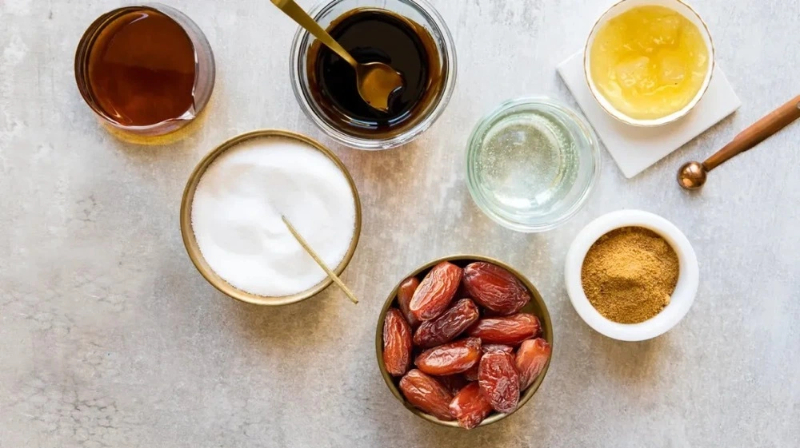
In beverages, sugar-free sweeteners redefine refreshment, powering zero-sugar sodas, sports drinks, and teas. Blends like sucralose-erythritol maintain carbonation bite without syneresis. Food applications span keto breads using allulose for Maillard reaction, to protein bars fortified with stevia sweeteners.[1]
Healthcare leverages sugar-free sweeteners for palatability in chewable vitamins, cough drops, and enteral formulas. Tablets compressed with mannitol dissolve rapidly, enhancing bioavailability. OEM factories excel here, developing custom sugar-free sweetener matrices for global pharma clients.
Confectionery thrives on polyol-based sugar-free sweeteners; sugar-free gummies with maltitol achieve chewy textures rivaling sucrose versions. Baking innovations include bulking agents alongside high-intensity sweeteners for volume in cakes.
Expertise in mixed sugar-free sweeteners unlocks superior profiles, where stevia-erythritol pairings eliminate aftertaste while preserving bulk. Our factory's R&D crafts synergistic blends incorporating functional polyols and fibers, tailored for tablet compression or powder dispersions. These sugar-free sweeteners reduce production costs by 20-40% through optimized ratios.[5]
OEM/ODM services streamline market entry, from lab-scale prototyping to million-unit runs of sugar-free sweetener tablets. Stability under diverse conditions—high humidity, temperature fluctuations—ensures reliability for export.
Crafting sugar-free sweeteners involves meticulous processes: stevia ferments enzymatically for purity, while sucralose synthesizes via selective chlorination. Polyols crystallize post-hydrogenation, yielding food-grade powders. GMP-certified lines integrate HACCP for contamination-free sugar-free sweeteners.[4][5]
Sustainability drives sourcing; regenerative stevia farming sequesters carbon, aligning with eco-conscious brands.
Sugar-free sweeteners market, valued at $18B in 2025, projects 8% CAGR through 2030, fueled by sugar reduction mandates. Natural segments like monk fruit surge 12% annually. Biotech ferments novel sweeteners like tagatose.[6][5]
Innovations include peptide-based sweeteners and AI-optimized blends for personalized nutrition.
FDA, EFSA, and JECFA endorse dozens of sugar-free sweeteners as GRAS or ADI-approved. Labeling mandates cover polyol laxation warnings and aspartame phenylalanine notes. Harmonized Codex standards facilitate trade.[2]
70% of consumers prefer natural sugar-free sweeteners, prioritizing taste equivalence. Challenges like stevia's licorice note resolve via microencapsulation. Cost parity advances with scaled production.
Sugar-free sweeteners evolve with microbiome-friendly fibers and rare-sugar hybrids. Precision fermentation promises abundant natural sweeteners, revolutionizing OEM capabilities.
Sugar-free sweeteners stand as pillars of modern health innovation, enabling delectable, low-calorie products across food, beverages, and healthcare. From stevia's purity to polyols' versatility, these sweeteners drive OEM success. Partnering with specialized factories ensures cutting-edge, compliant solutions that delight consumers globally.
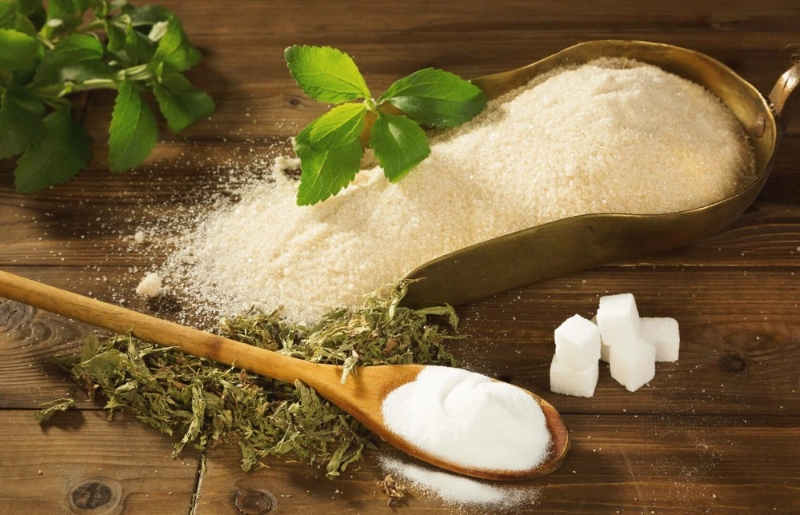
Sugar-free sweeteners include stevia, monk fruit, erythritol, sucralose, and aspartame, each varying in sweetness and use.[2][1]
Yes, most sugar-free sweeteners like stevia and erythritol have minimal glycemic impact, approved for diabetic use.[3][4]
Absolutely, erythritol and sucralose excel in baking as sugar-free sweeteners, providing volume and heat stability.[4][1]
Natural sugar-free sweeteners derive from plants like stevia, while artificial ones like aspartame are synthesized for higher intensity.[2][3]
Sugar-free sweeteners reduce calories and sugar in drinks, enabling diet versions with familiar sweetness.[5][1]
[1](https://www.geisinger.org/health-and-wellness/wellness-articles/2023/03/23/19/29/sugar-substitutes-understanding-your-options)
[2](https://www.fda.gov/food/food-additives-petitions/aspartame-and-other-sweeteners-food)
[3](https://www.uclahealth.org/news/article/guide-sugar-substitutes)
[4](https://nutritionsource.hsph.harvard.edu/healthy-drinks/artificial-sweeteners/)
[5](https://pdf.dfcfw.com/pdf/H3_AP202412131641289648_1.pdf)
[6](https://www.cbndata.com/information/294182)
[7](https://www.mayoclinic.org/healthy-lifestyle/nutrition-and-healthy-eating/in-depth/artificial-sweeteners/art-20046936)


