


Content Menu
● Why Sucralose Is Not Natural
● Benefits and Uses of Sucralose
● Common Misconceptions about Sucralose
● Frequently Asked Questions (FAQs)
>> 1. Is sucralose safe to consume daily?
>> 2. Does sucralose affect blood sugar levels?
>> 3. Can sucralose be used in baking and cooking?
>> 4. Is sucralose natural or artificial?
>> 5. Does sucralose cause tooth decay?
Sucralose is an artificial sweetener that is chemically synthesized from natural sugar (sucrose) but is not considered a natural sweetener itself. It is made by selectively replacing three hydroxyl groups on the sucrose molecule with chlorine atoms, resulting in a compound about 600 times sweeter than sugar and virtually calorie-free. This chemical modification places sucralose firmly in the category of synthetic sweeteners, widely used in food, beverage, and healthcare products due to its sweetness, stability, and safety profile.
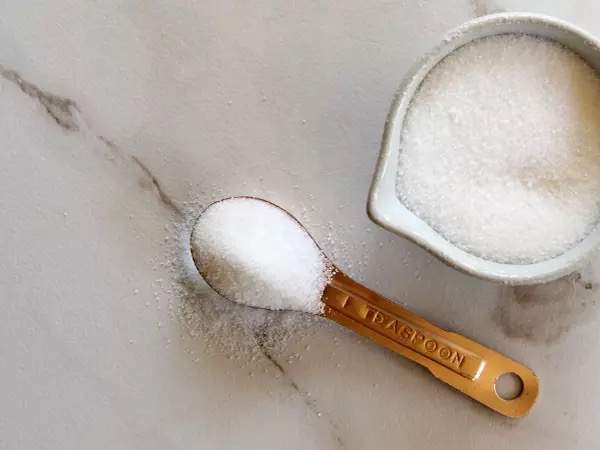
Sucralose is a high-intensity sweetener discovered in 1976 and developed jointly by McNeil Specialty Products Company and Tate & Lyle plc. It is produced through a complex chemical process starting with natural sucrose (table sugar). The process involves multiple steps where specific hydroxyl groups on the sugar molecule are replaced with chlorine atoms at the 4, 1', and 6' positions, creating a chlorinated sugar derivative.[7][8]
This alteration provides sucralose with its extraordinary sweetness—approximately 600 times sweeter than sucrose—while preventing it from being metabolized by the body for energy, hence its zero-calorie status. Sucralose is also heat-stable, meaning it retains sweetness under cooking and baking temperatures, unlike some other artificial sweeteners. Additionally, it has bacteriostatic properties that inhibit bacteria responsible for tooth decay.
The manufacturing of sucralose involves several well-controlled chemical reactions and purification steps to ensure high purity and safety:
1. Starting Material: The process begins with sucrose, a natural sugar obtained from sources like sugar cane or sugar beets.
2. Protection and Acetylation: The sugar molecule undergoes protection of hydroxyl groups on the sugar ring through reactions with acetic anhydride and other reagents. This step prevents unwanted reactions at certain sites during chlorination.
3. Selective Chlorination: Using chemical agents like thionyl chloride and triphenylphosphine oxide, specific hydroxyl groups are selectively replaced by chlorine atoms at the 4, 1', and 6' positions on the sugar molecule. This regioselective chlorination is key to producing sucralose's unique structure.
4. Deprotection and Deacetylation: The protective groups added earlier are removed under basic conditions with methanol and sodium methoxide, yielding the final sucralose molecule.
5. Purification: The crude sucralose product is purified through recrystallization, activated carbon treatment, and thorough filtration to achieve a purity level exceeding 99%, essential for food and pharmaceutical applications.
6. Formulation: The pure sucralose powder is then formulated into consumer-ready products as a fine white crystalline powder.
This precise production method ensures that sucralose is consistently produced under mild conditions with high yield and minimal impurities.[1][2][3][5]
Despite starting from a natural product—sucrose—sucralose cannot be classified as natural due to its extensive chemical modification in the laboratory. Natural sweeteners are generally products extracted from plants without significant chemical changes. In contrast, sucralose involves a patented synthetic process introducing chlorine atoms that do not occur naturally in sugar.
The chlorine substitution drastically changes the chemical and metabolic properties of the molecule. This artificial alteration is necessary to render the sweetener non-caloric and intensely sweet but excludes sucralose from the natural product category.[8][11][12]
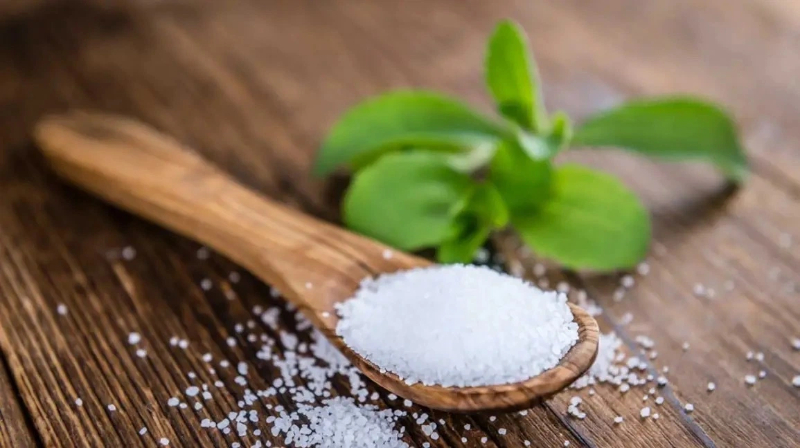
- Calorie Control: Since sucralose is not metabolized by the body, it contributes almost no calories, making it attractive for weight management and diabetic-friendly products.
- Stability: It retains its sweetness even after exposure to heat, light, and varying pH, supporting its use in baking, cooking, and beverages.
- Safety: Approved by FDA and other global food safety authorities, sucralose is extensively studied and regarded as safe within daily intake limits.
- Dental Health: Unlike sugar, sucralose does not contribute to tooth decay and helps maintain oral health due to its bacteriostatic properties.
- Taste Profile: It provides a clean, sugar-like sweetness without the bitterness or aftertaste associated with some other artificial sweeteners.
Sucralose's wide adoption spans beverages, dairy products, confections, and healthcare nutritional supplements, reflecting its role in sugar reduction and calorie-conscious formulations.[12][13][14]
- Is Sucralose Natural? No, it is synthetic despite originating from sugar.[11]
- Does Sucralose Provide Calories? It provides negligible calories as it is not metabolized for energy.[13]
- Is Sucralose Safe? Yes, it is approved globally and generally recognized as safe (GRAS) by regulatory agencies.[12]
- Does It Affect Blood Sugar? Sucralose has minimal impact on blood glucose and insulin levels, making it suitable for diabetic diets.[13]
- Can Sucralose Be Used in Cooking? Yes, due to its heat stability.[14]
Sucralose is a widely used artificial sweetener produced through a multi-step chemical process starting from natural sucrose. By selectively replacing specific hydroxyl groups with chlorine atoms, it achieves intense sweetness without calories. Although derived from sugar, sucralose's chemical structure and properties classify it as synthetic rather than natural. It offers benefits such as heat stability, safety approval, dental health advantages, and suitability for diabetic diets. Its extensive use in food, beverage, and health industries underscores its efficacy as a sugar substitute designed to meet modern consumer demands for sweetness with fewer calories.
Yes, sucralose is rigorously tested and approved by food safety authorities worldwide, including the FDA. Daily consumption within prescribed limits is considered safe for most people.[11][12]
No, sucralose does not raise blood sugar or insulin levels because it is not broken down by the body as a carbohydrate.[14][13]
Yes, sucralose is heat-stable and maintains its sweetness during cooking, baking, and other food processing applications.[14]
Sucralose is an artificial sweetener manufactured through chemical modification of natural sucrose and is not naturally occurring in food.[8][11]
No, sucralose does not contribute to tooth decay and can actually help prevent bacterial growth that leads to cavities, unlike regular sugar.[13]
[1](https://easybuyingredients.com/blog/sucralose-production-demystified-from-raw-materials-to-manufacturing-process/)
[2](https://patents.google.com/patent/US7932380B2/en)
[3](https://www.nbinno.com/article/sweeteners/the-manufacturing-process-of-sucralose-ensuring-quality-and-purity)
[4](https://processengr.com/project/sucralose-sweetener-manufacturing-plant-preliminary-process-design/)
[5](https://www.sciencesnail.com/science/the-synthesis-of-sucralose-from-sucrose)
[6](https://pdfs.semanticscholar.org/20ef/2df54580653c01409d6dedb6a85a73703bd8.pdf)
[7](https://www.sciencedirect.com/topics/food-science/sucralose)
[8](https://en.wikipedia.org/wiki/Sucralose)
[9](https://www.spectrumchemical.com/media/flowchart/Flowchart_S1416.pdf)
[10](https://patents.google.com/patent/ES2463768T3/en)
[11](https://www.downtoearth.org/articles/2009-03/68/sucralose-dangerous-sugar-substitute)
[12](https://www.webmd.com/diet/what-to-know-about-sucralose)
[13](https://pmc.ncbi.nlm.nih.gov/articles/PMC10971371/)
[14](https://www.nebraskamed.com/health/healthy-lifestyle/bariatrics-weight-loss/monk-fruit-sucralose-and-other-sugar-substitutes)


